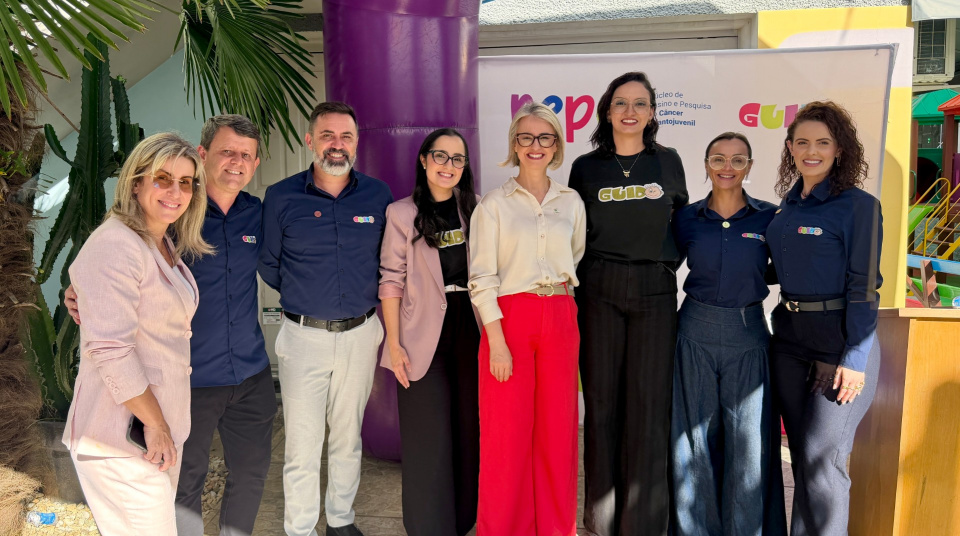
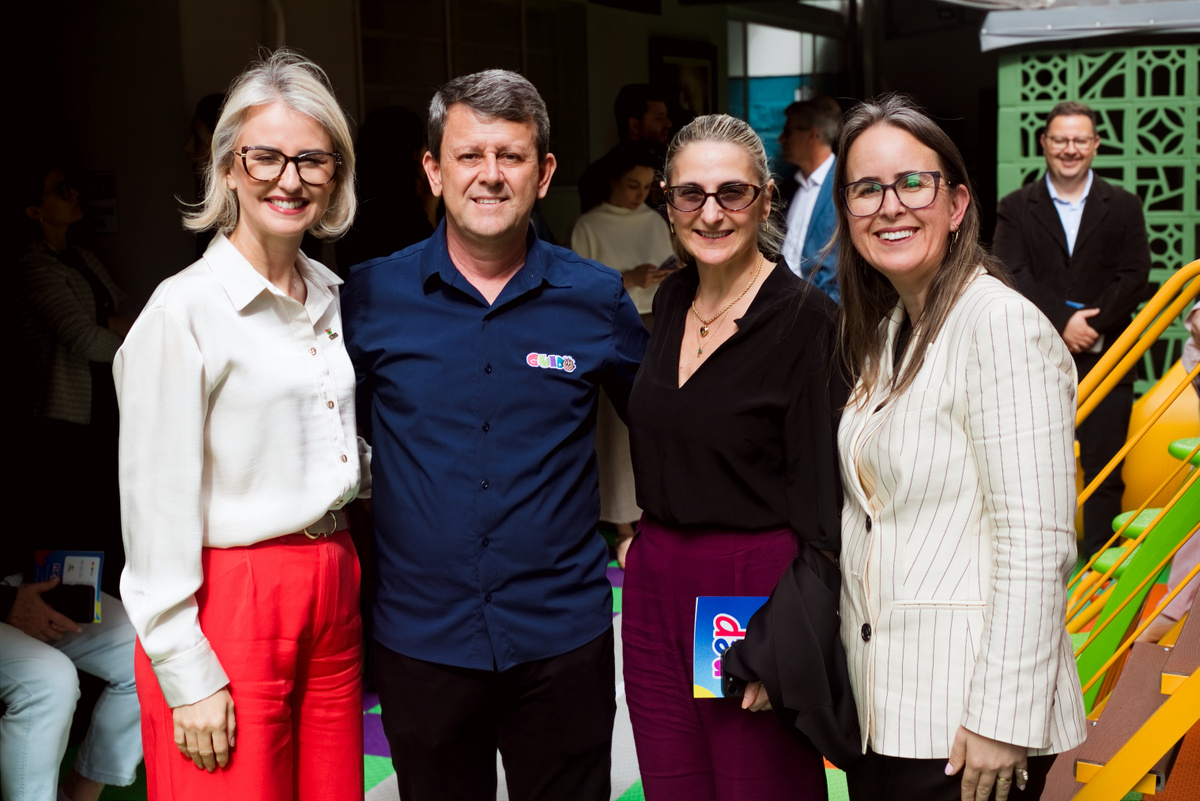
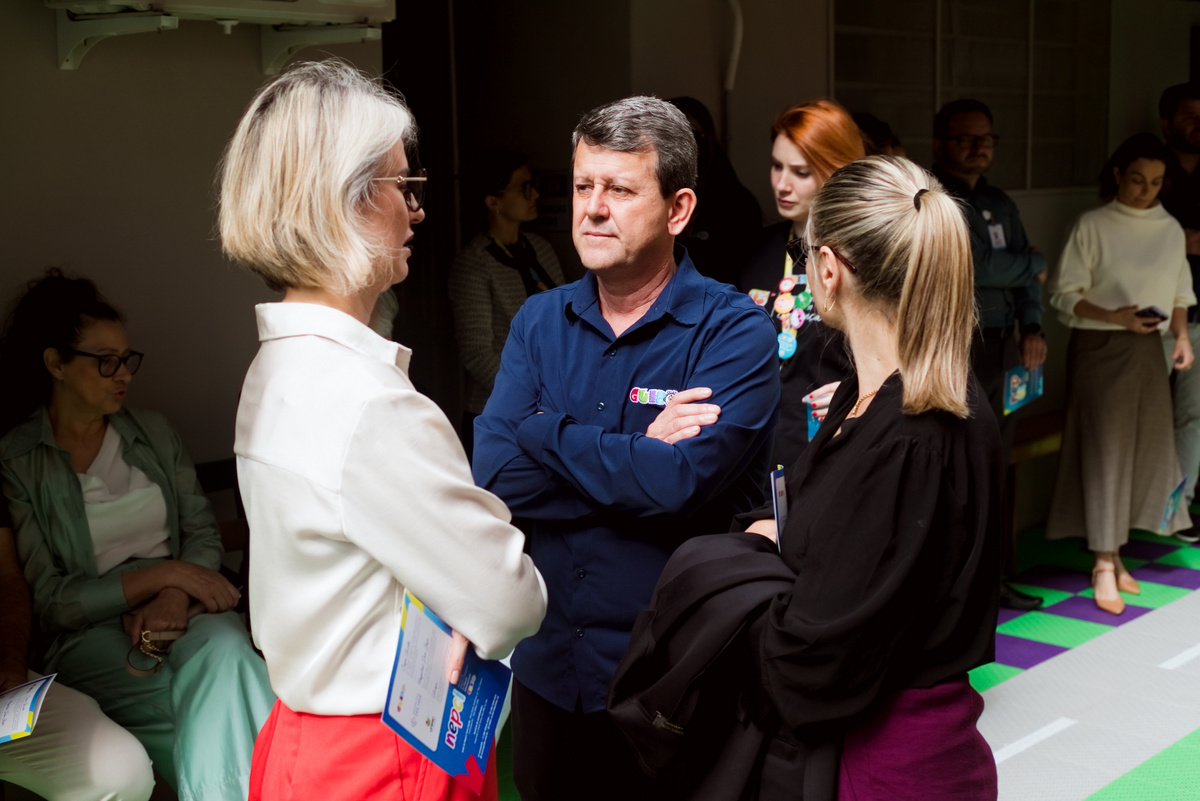
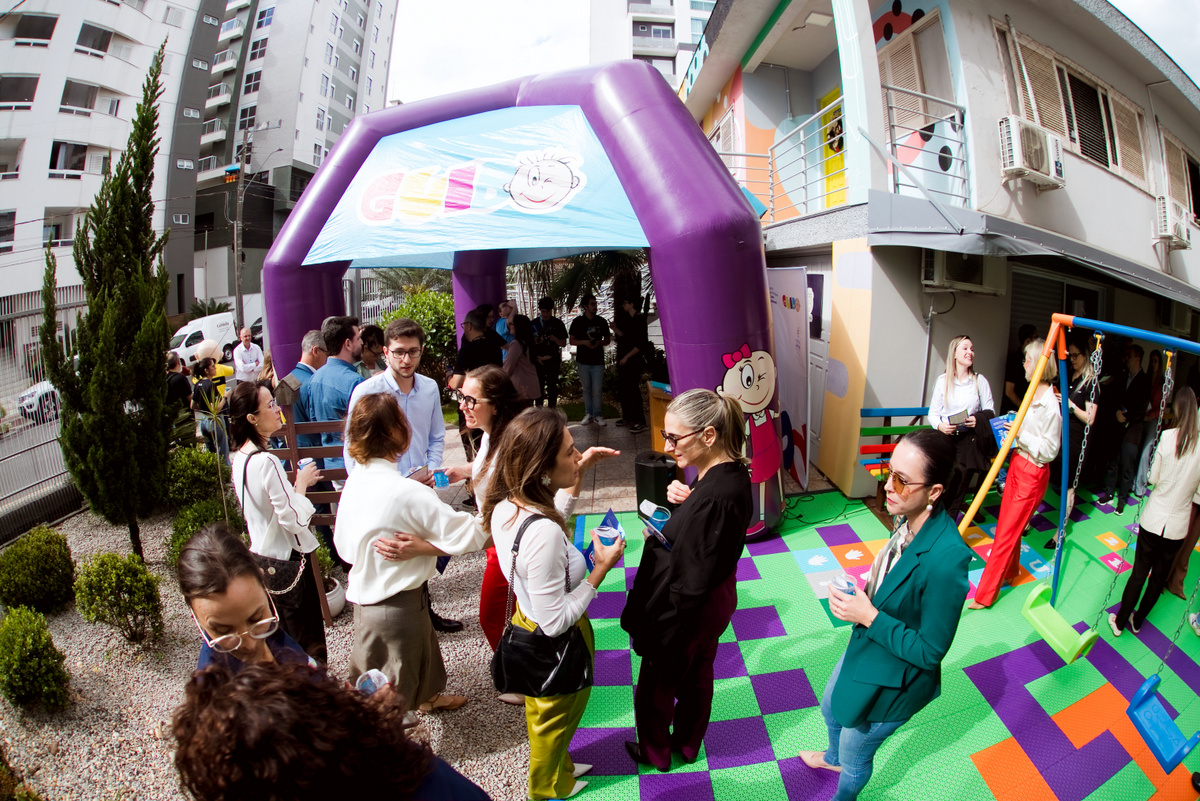
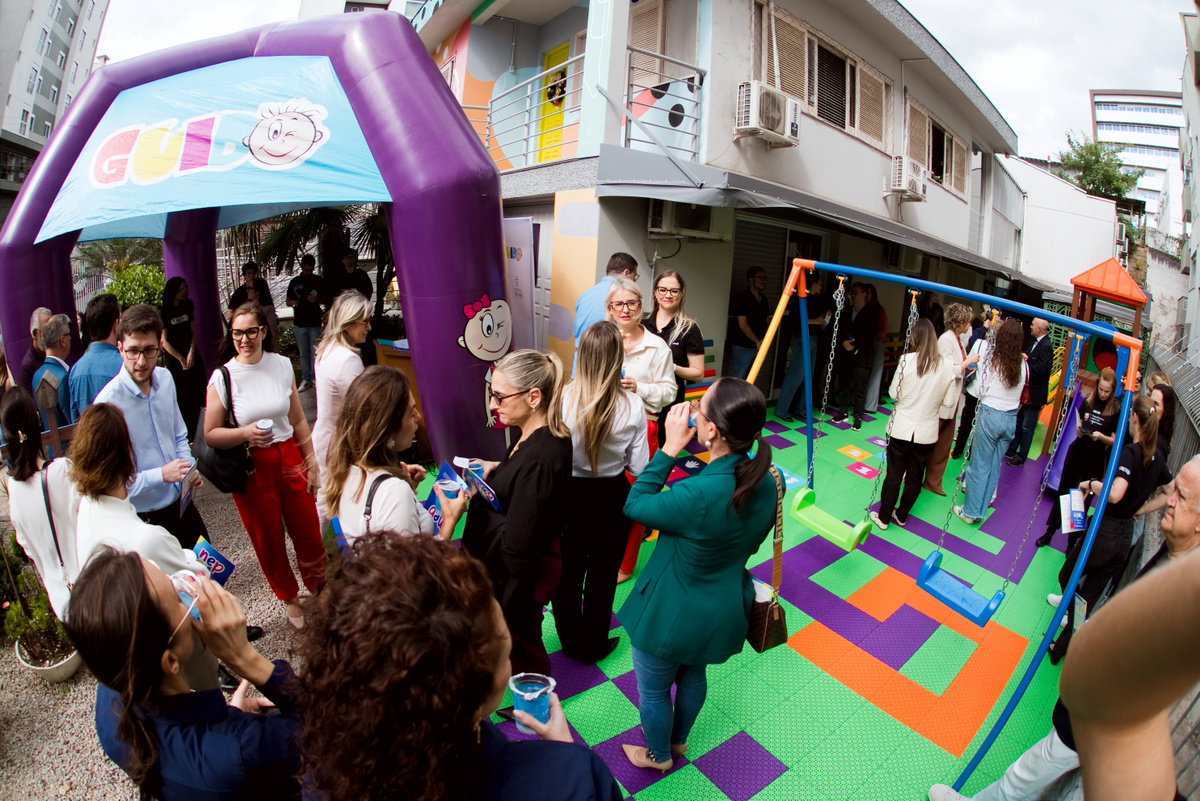
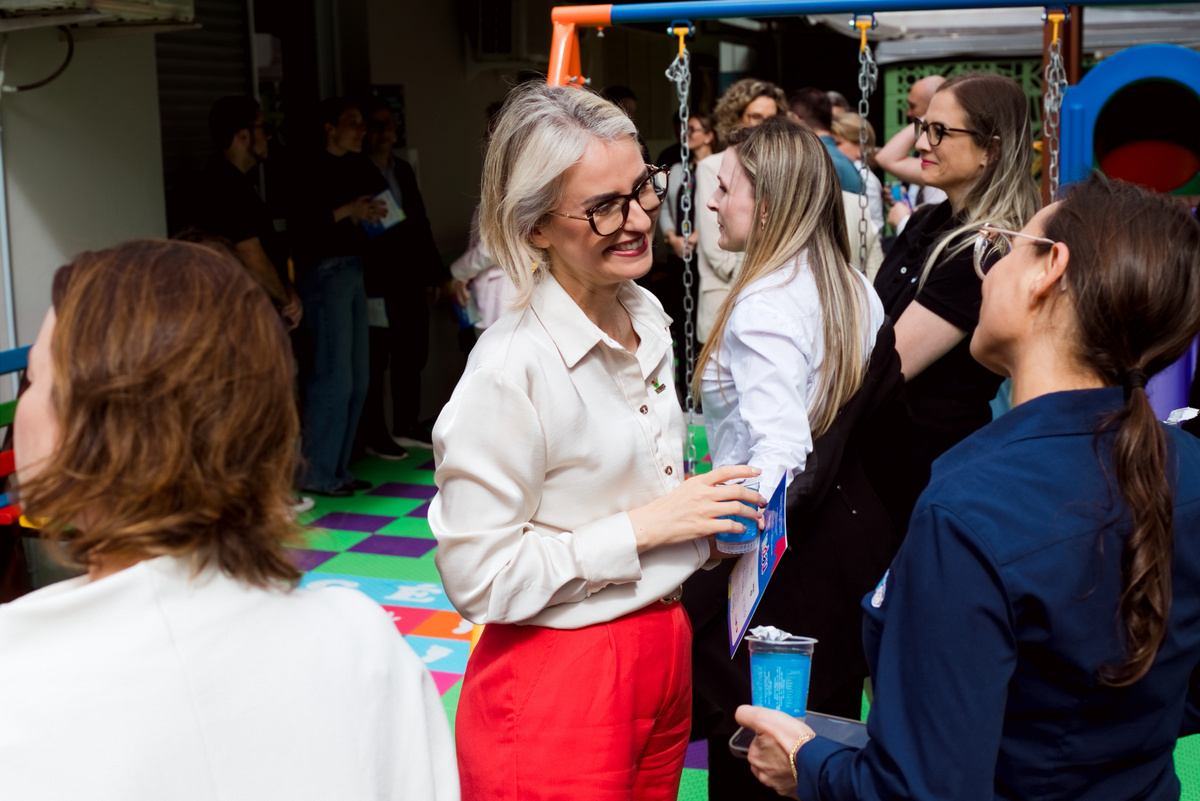
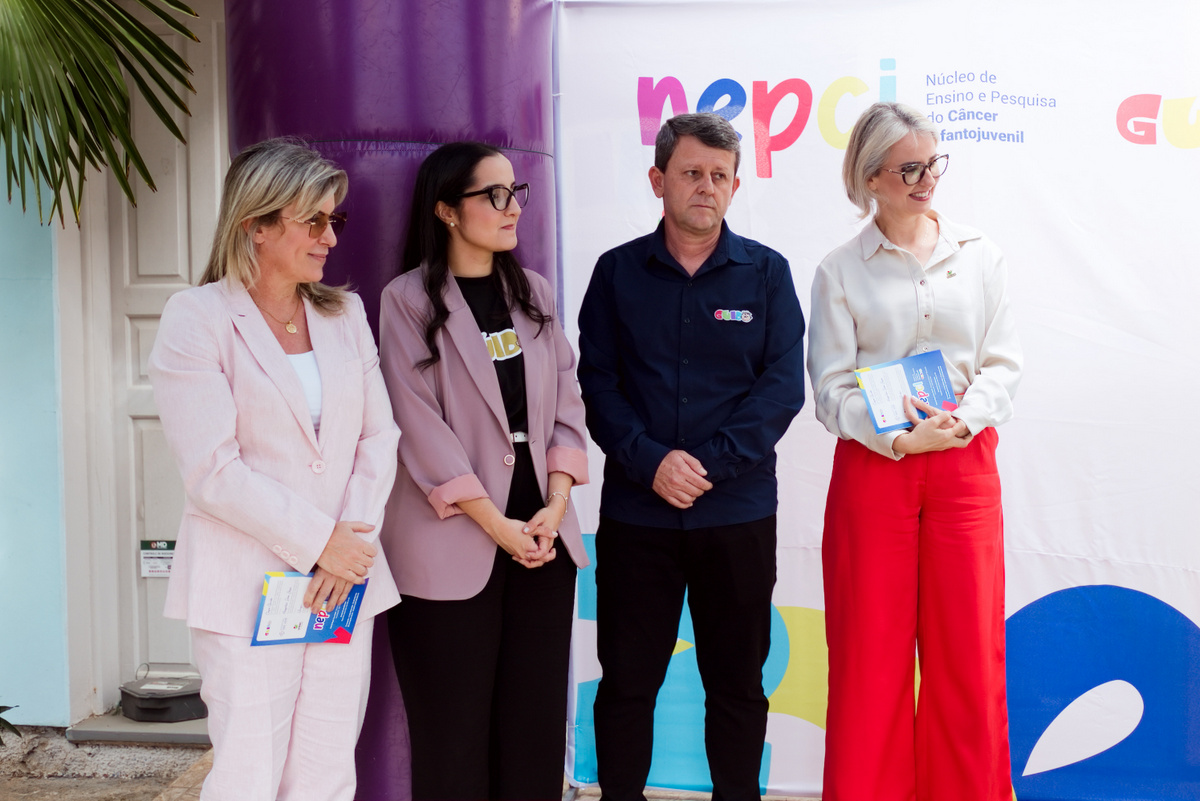
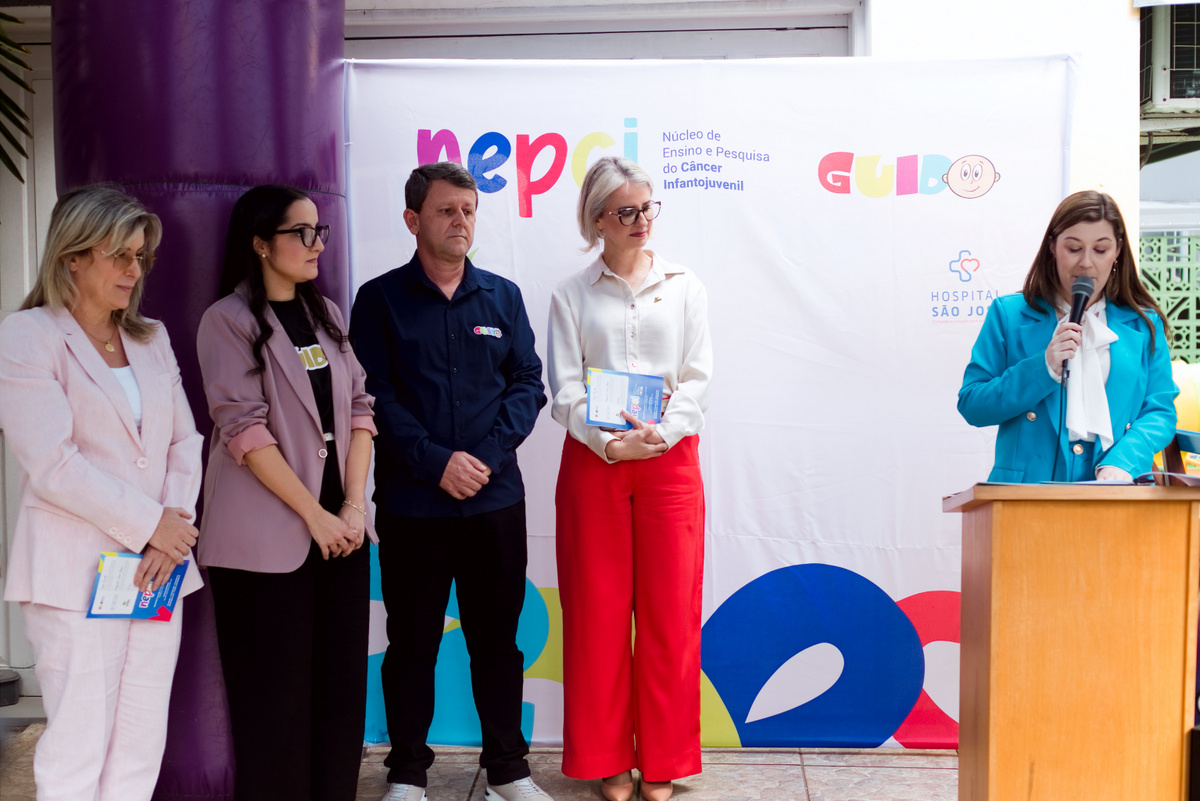
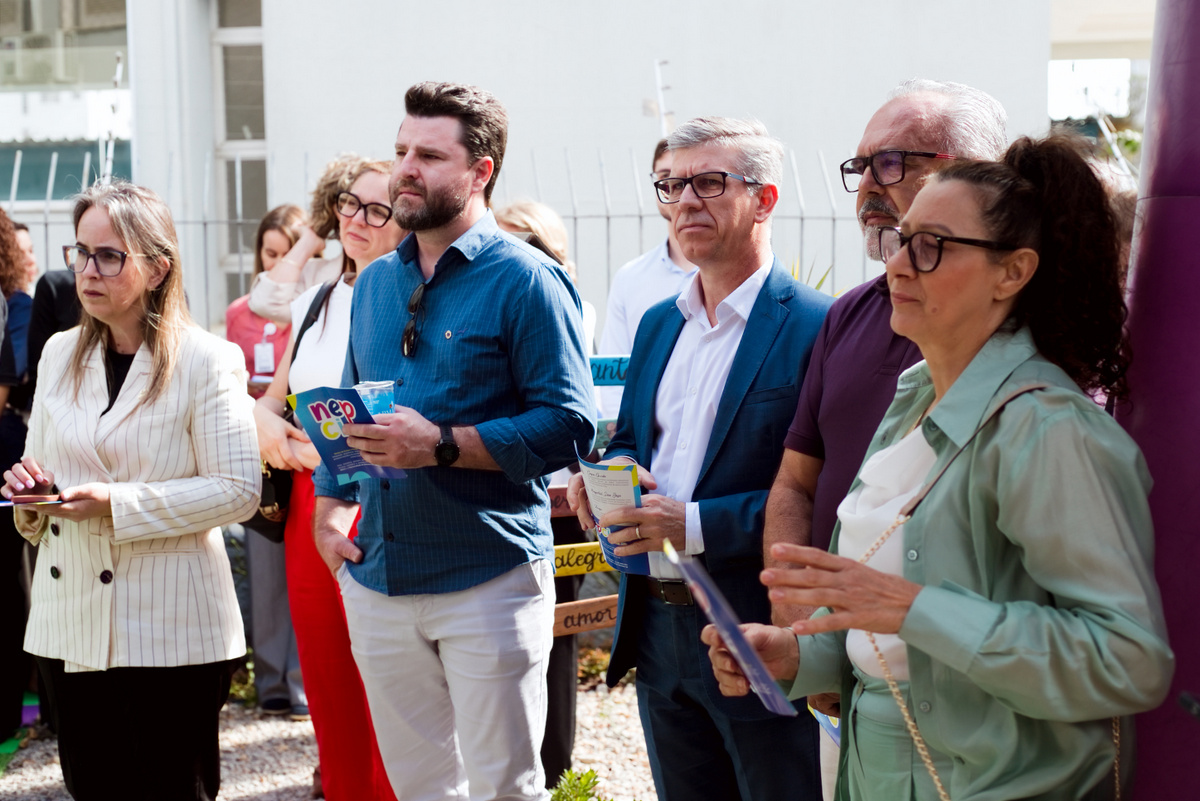
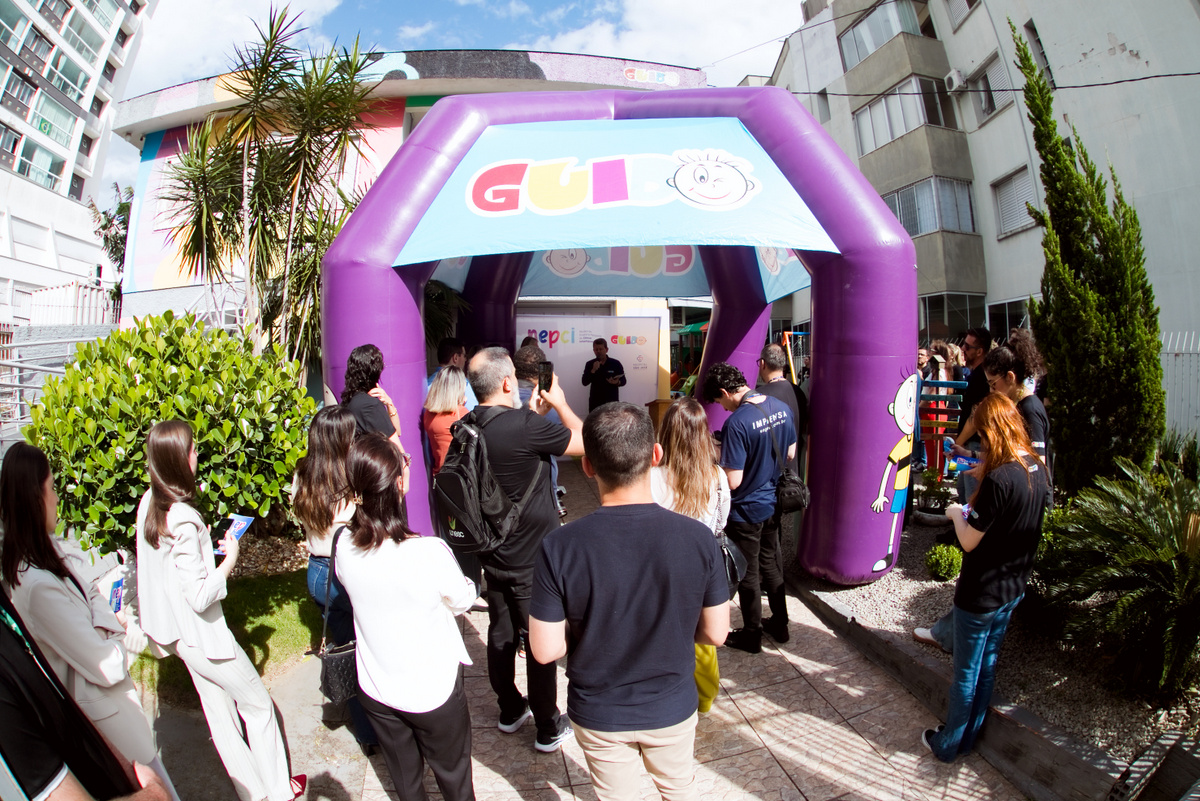
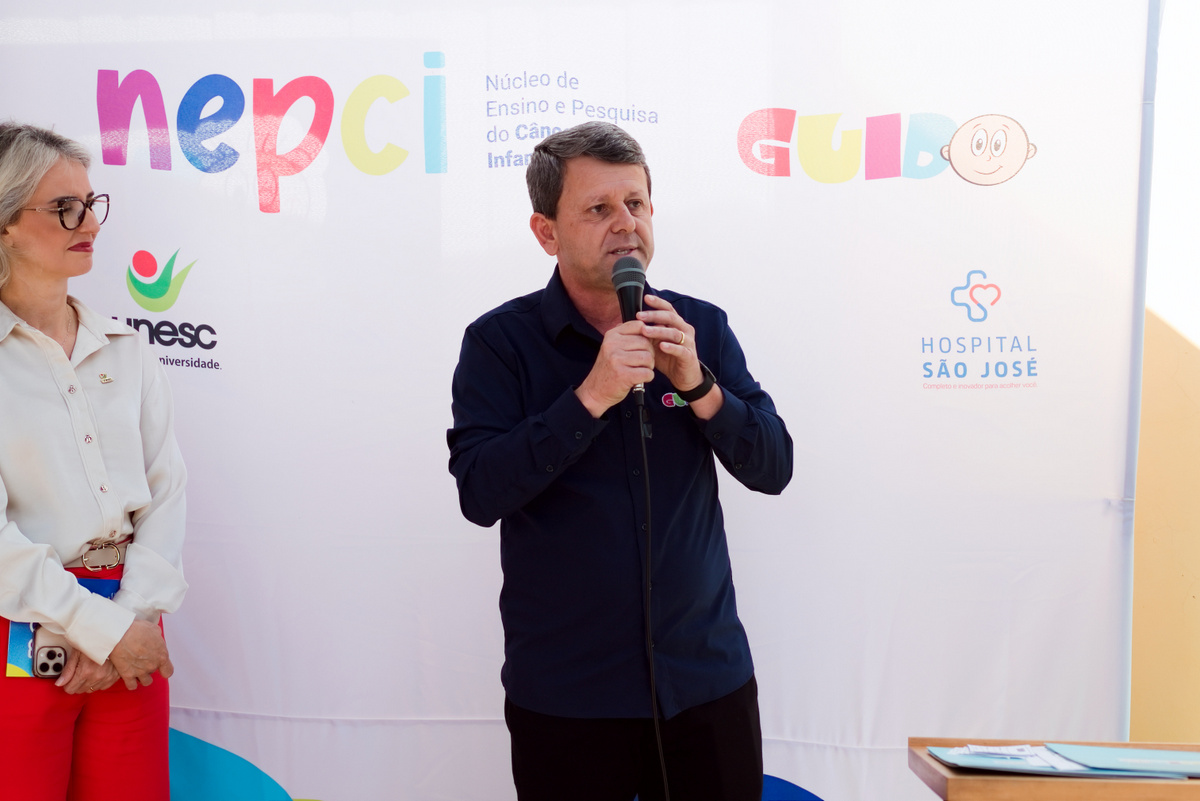
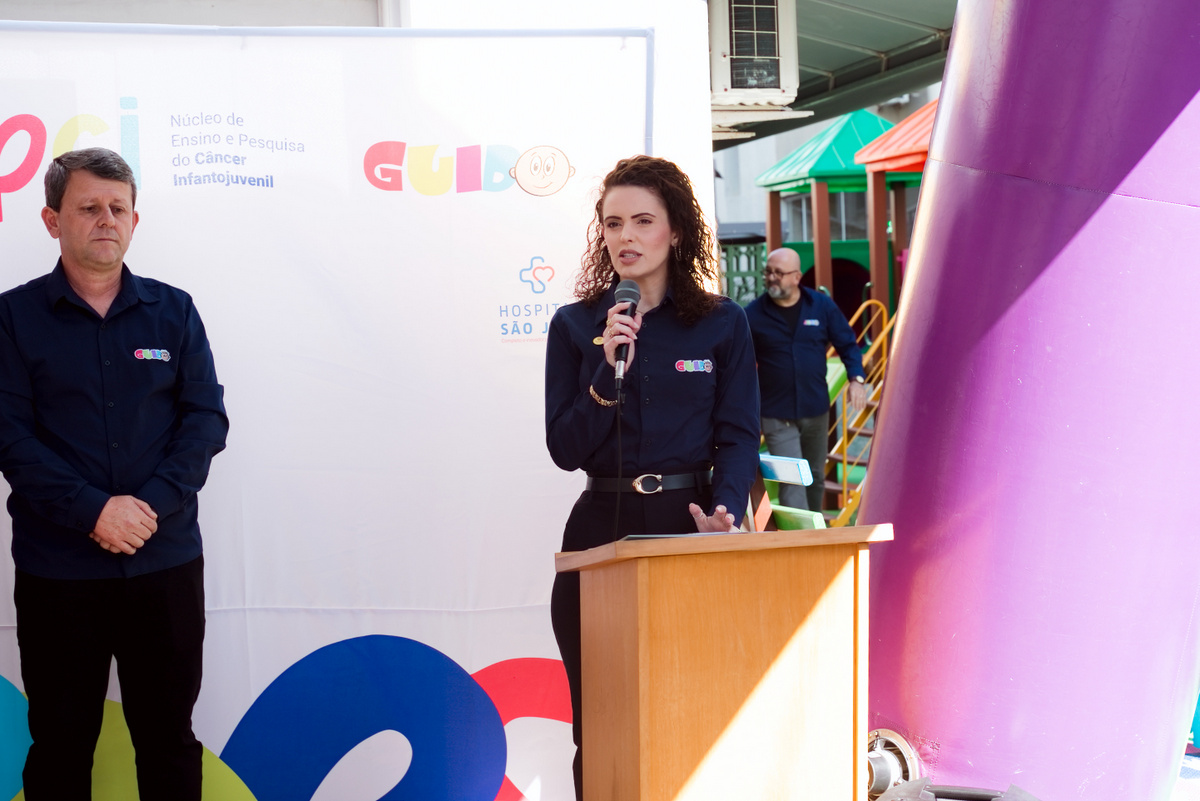
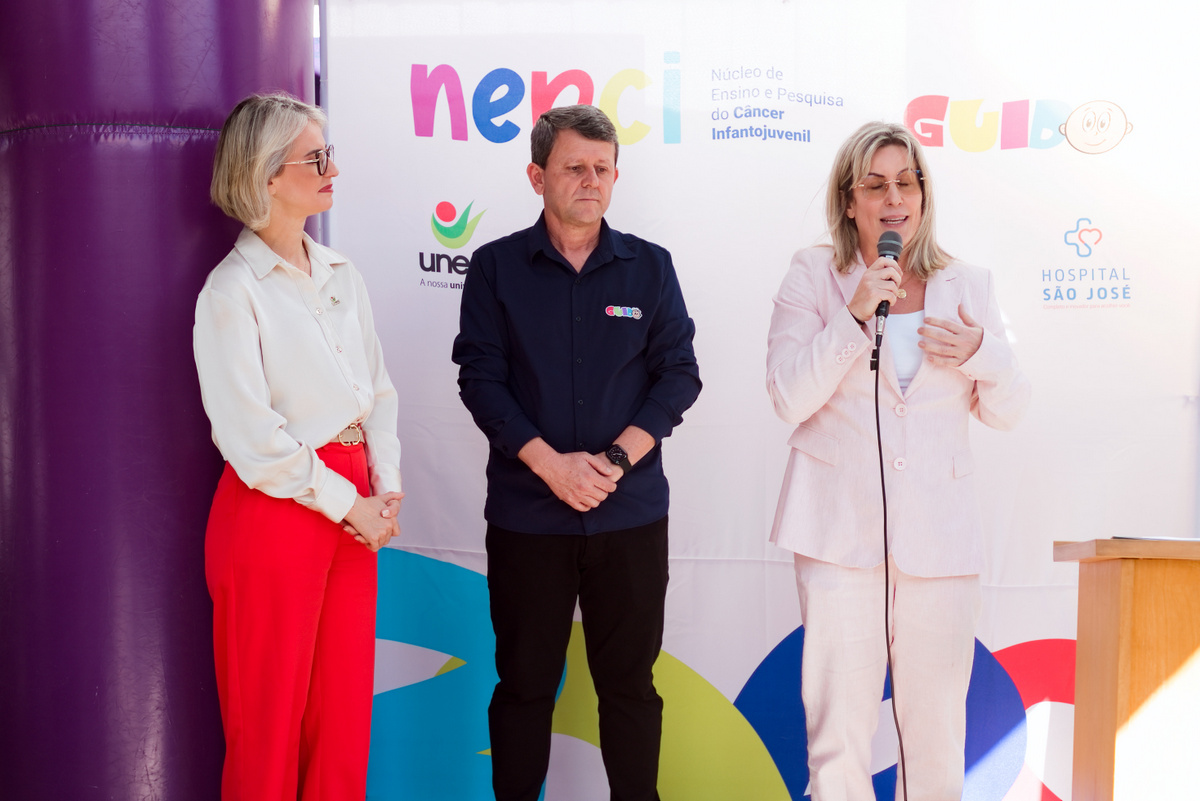
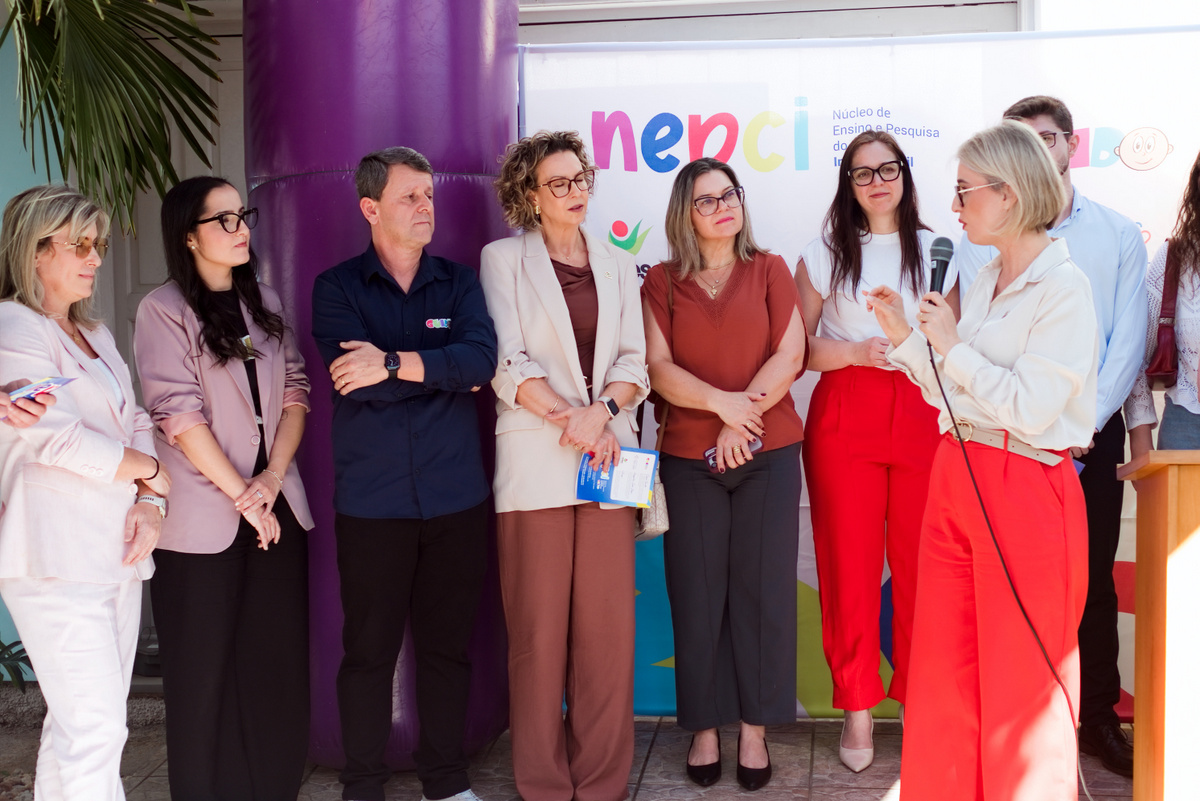
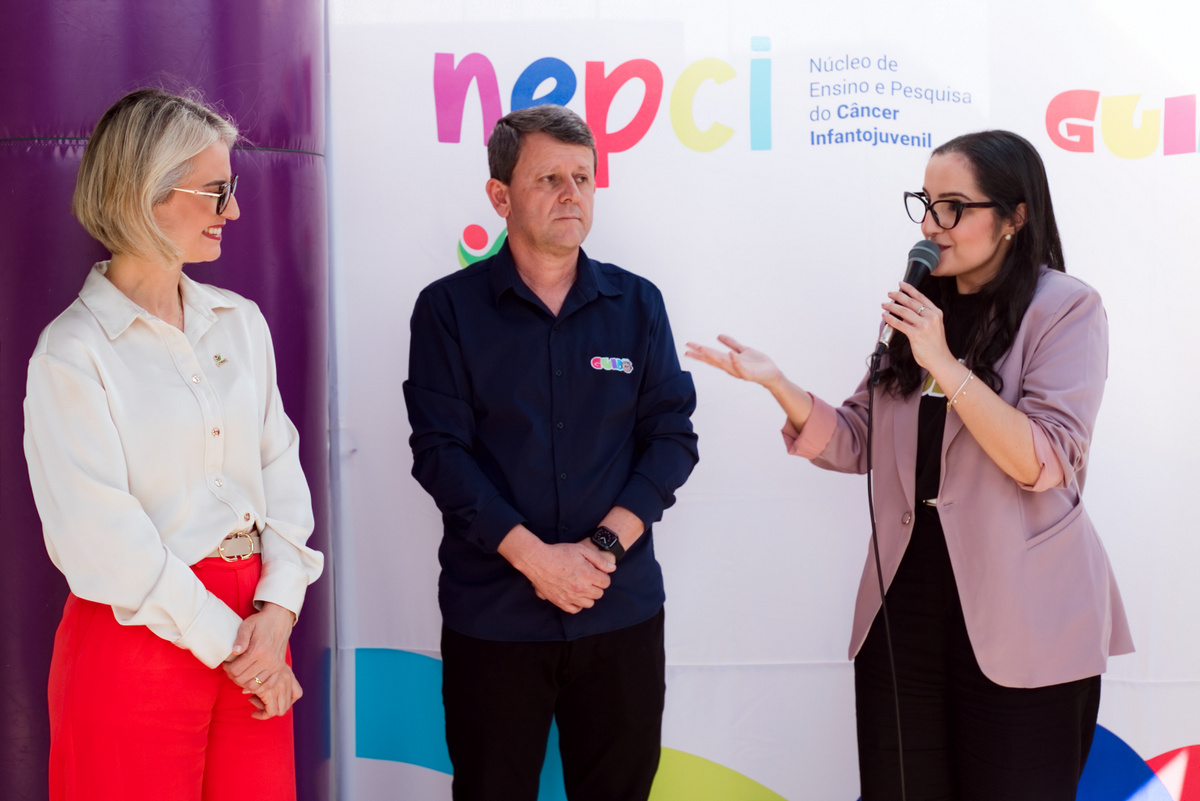
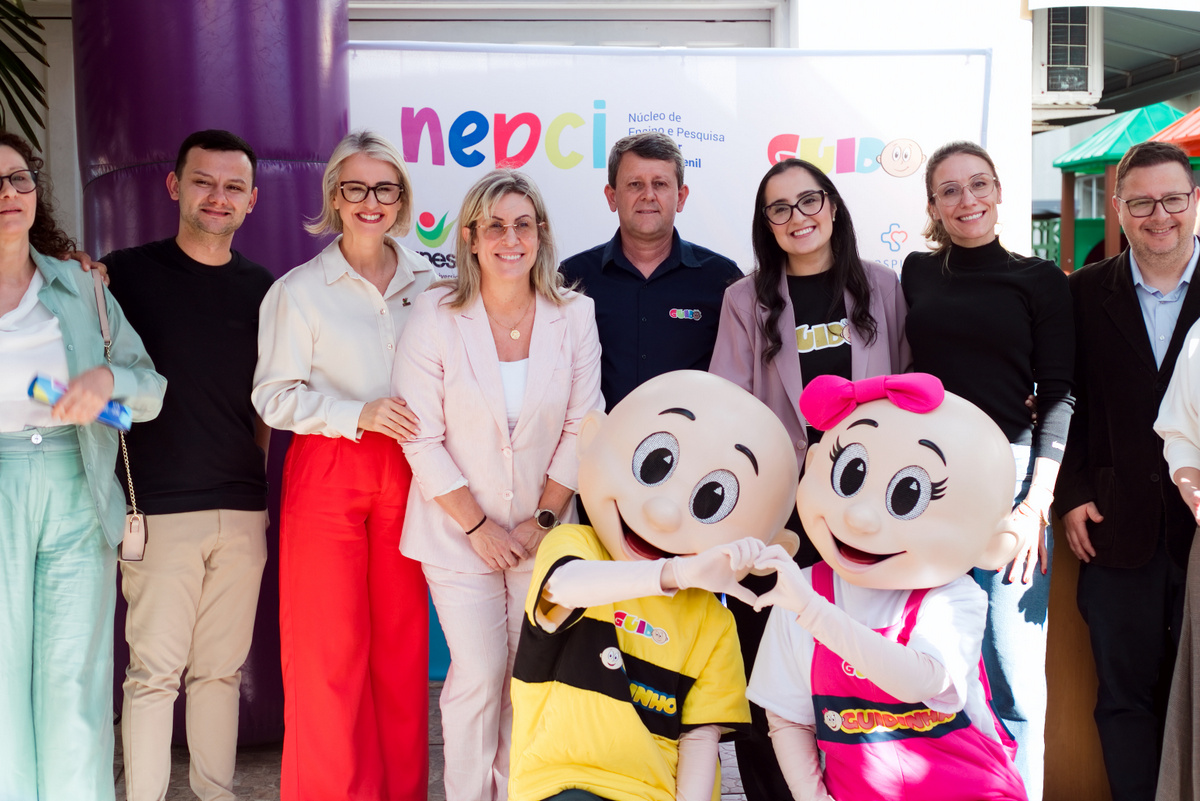
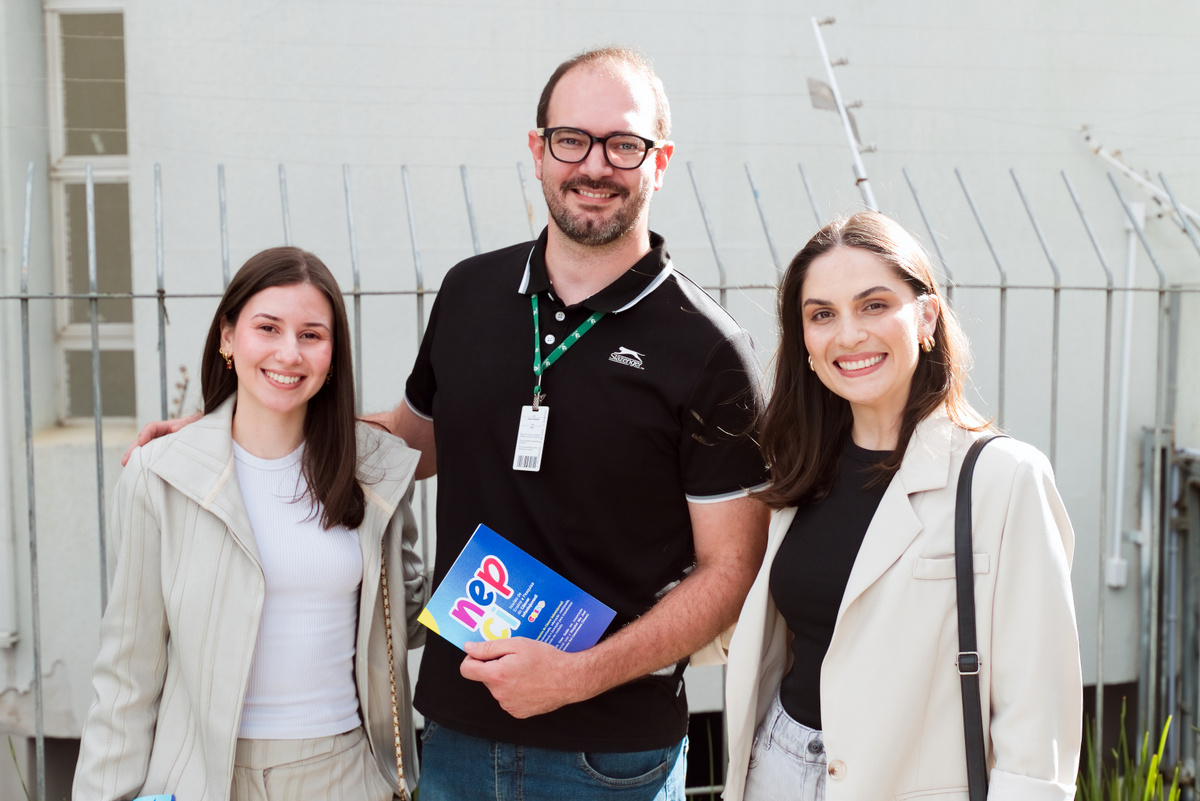
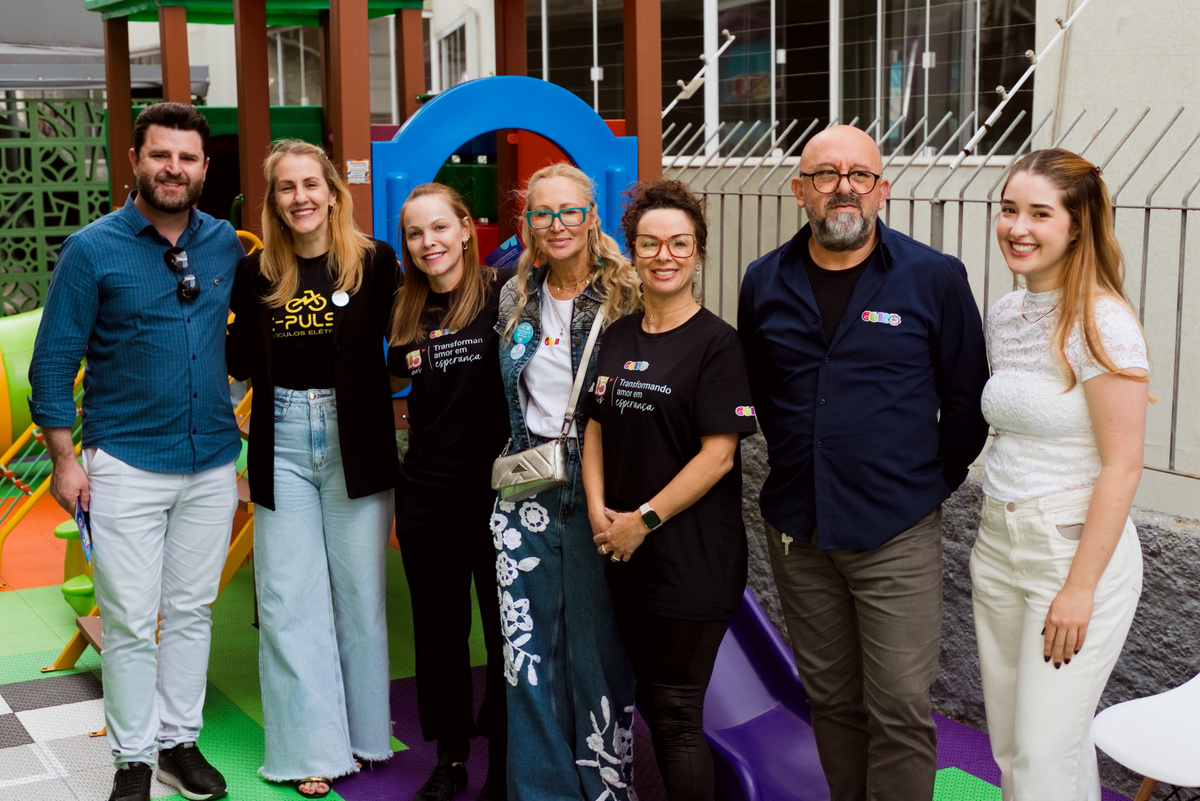
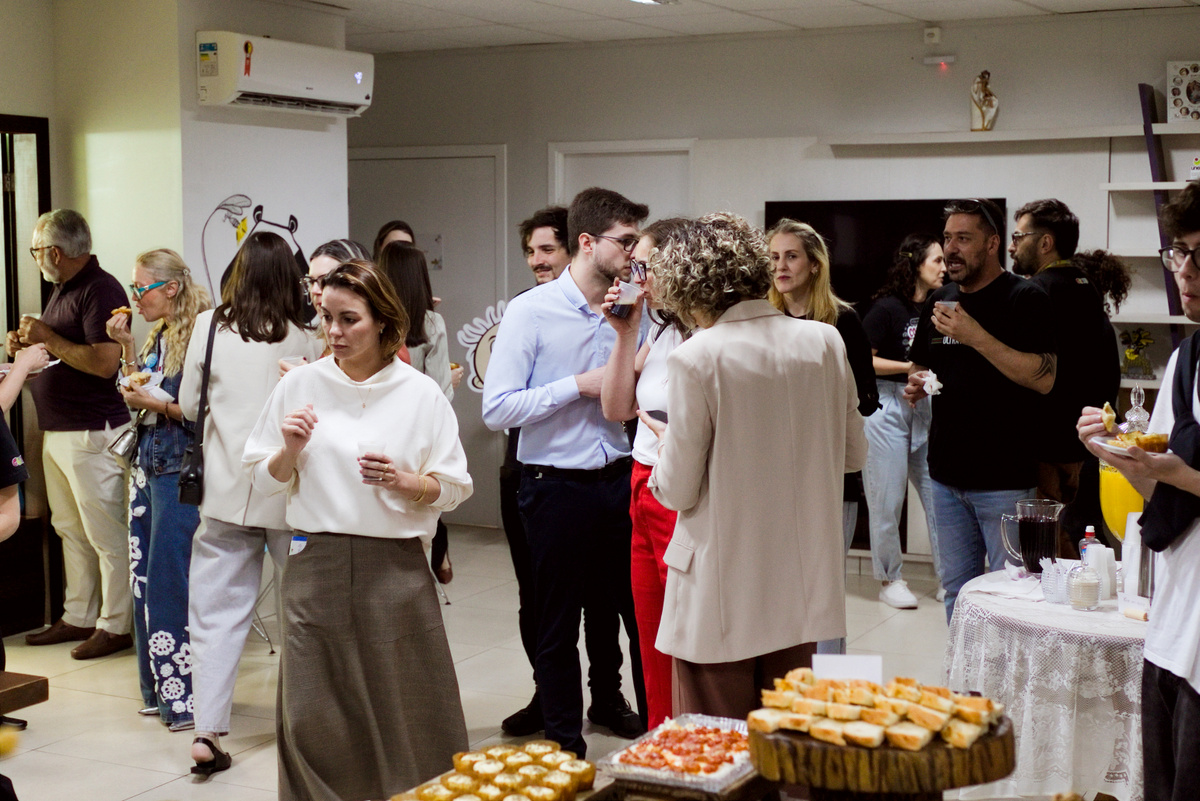
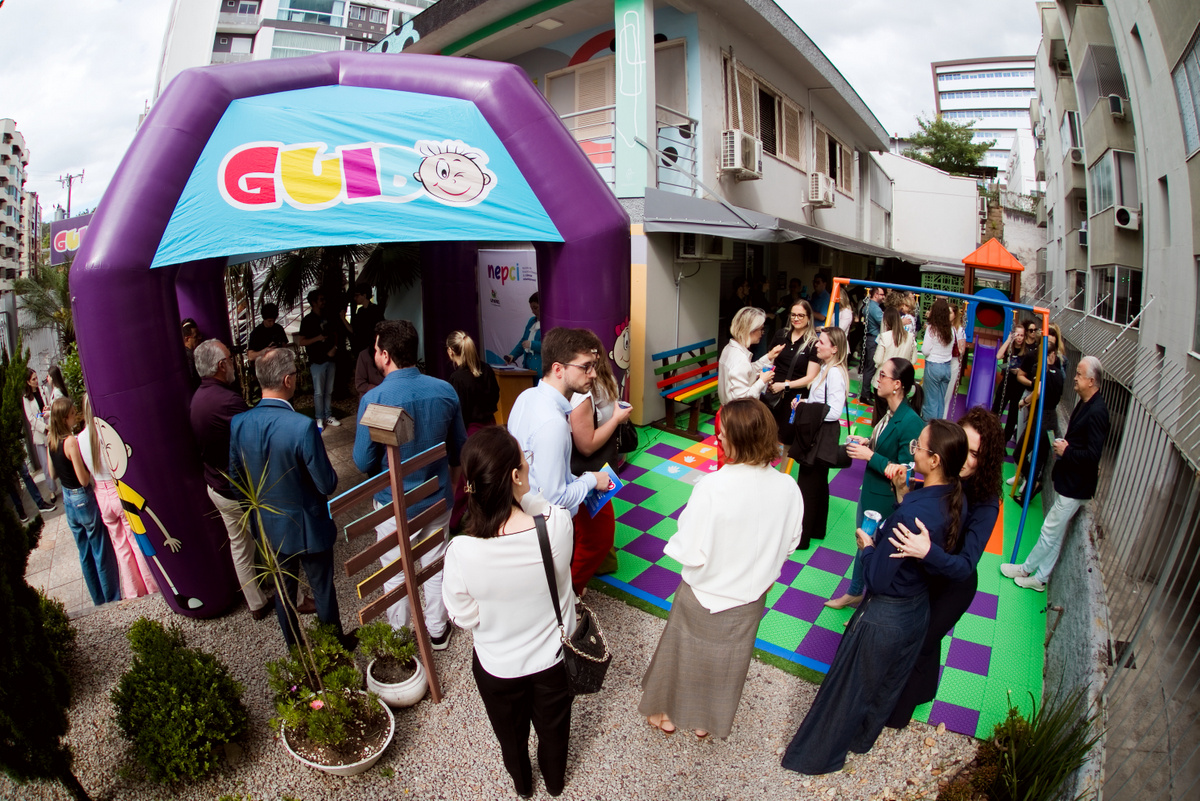
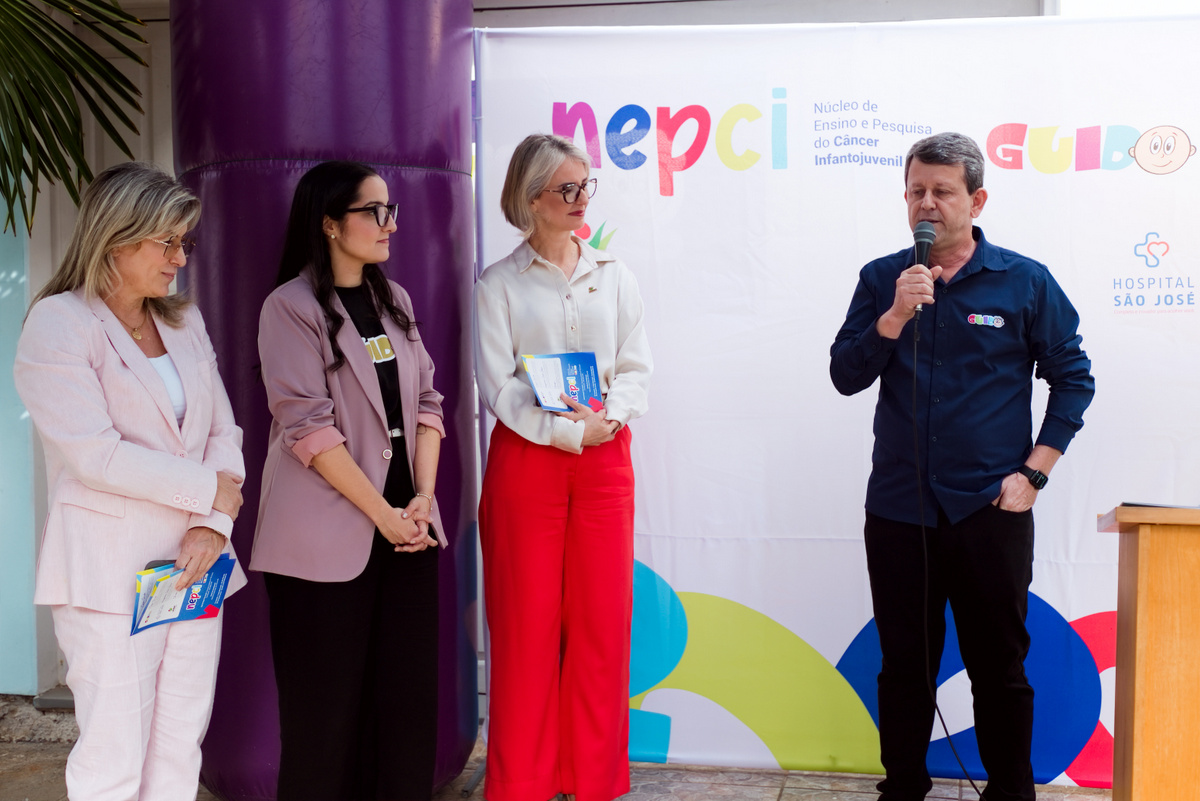
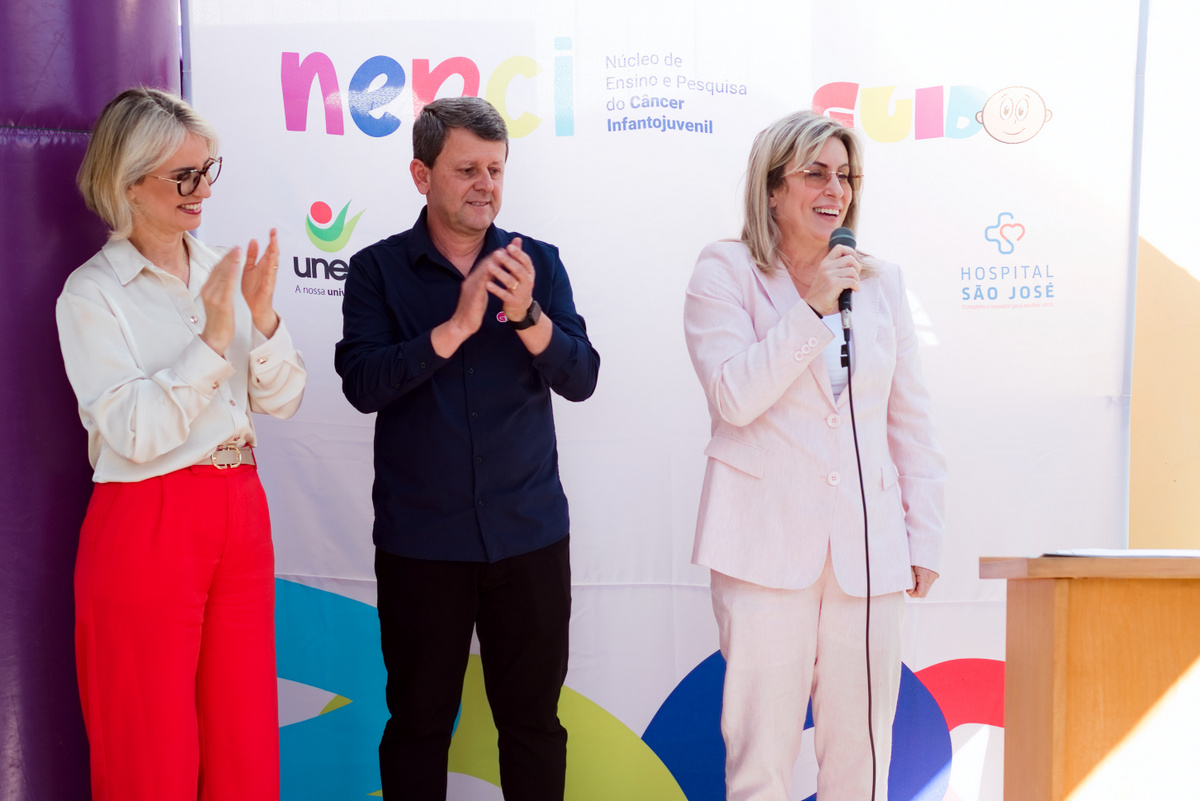
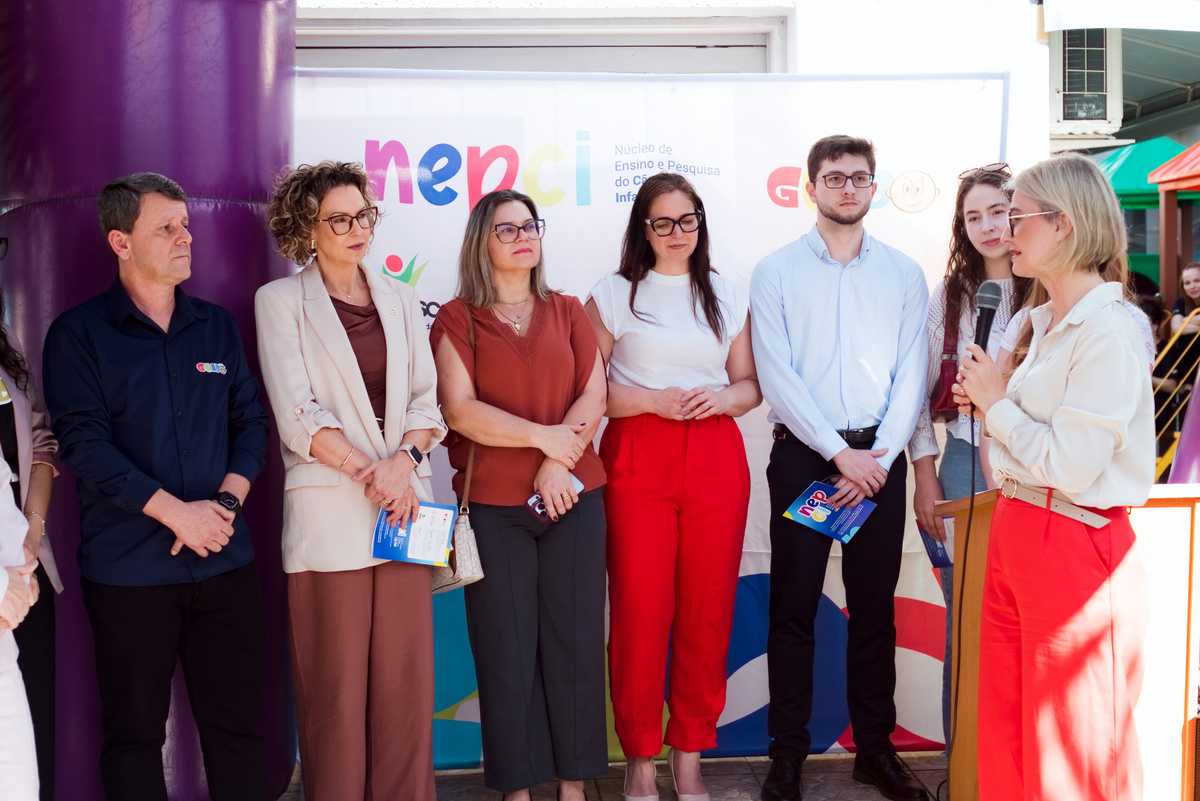
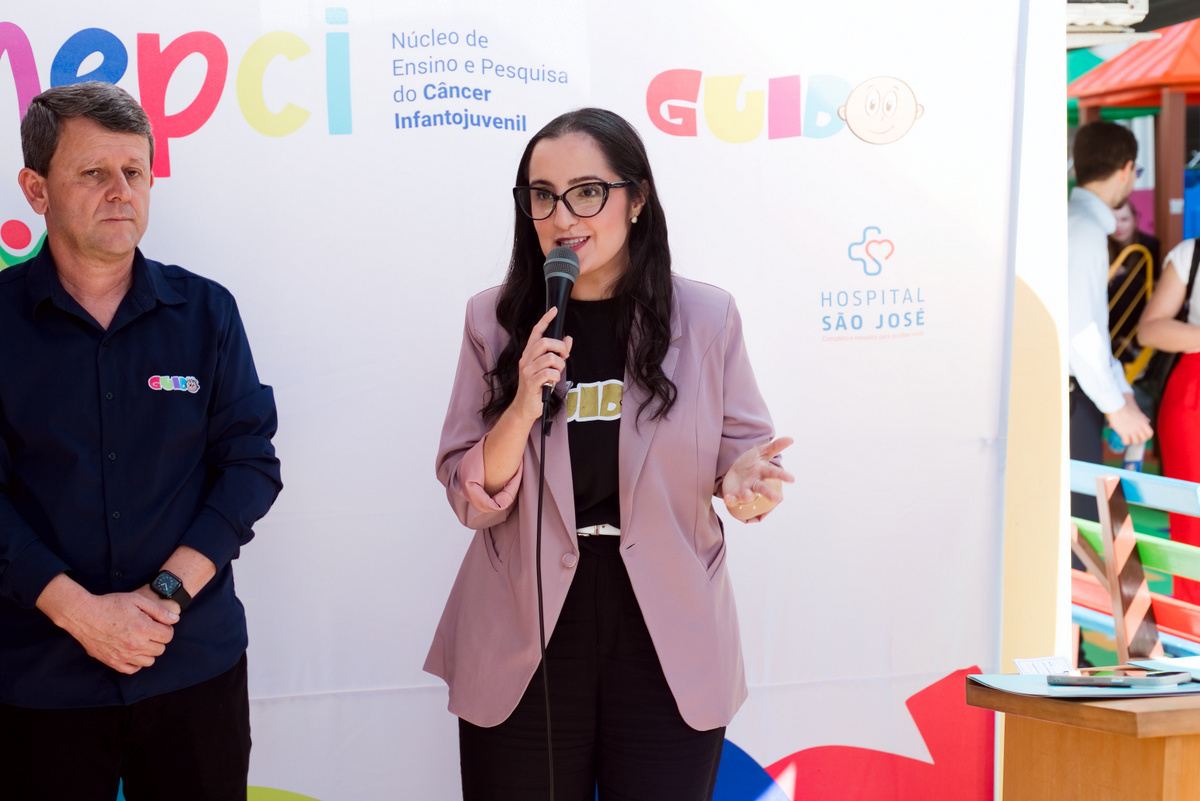
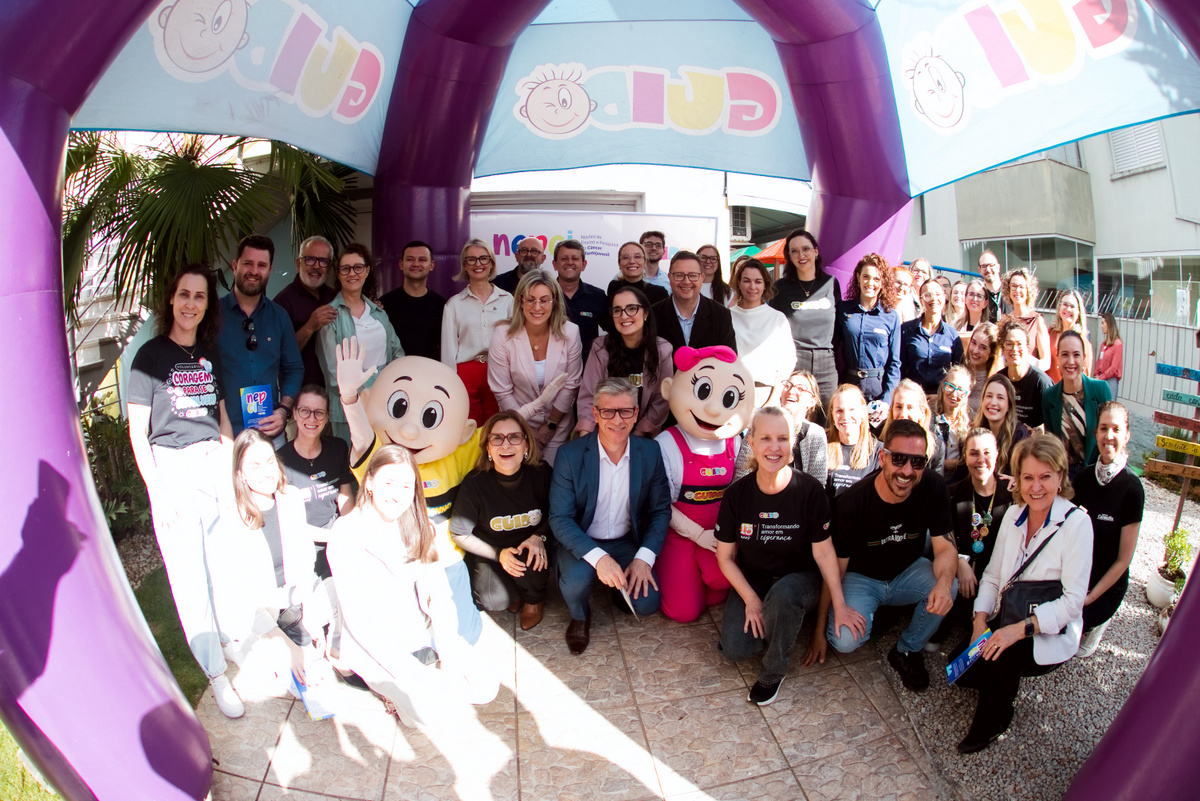
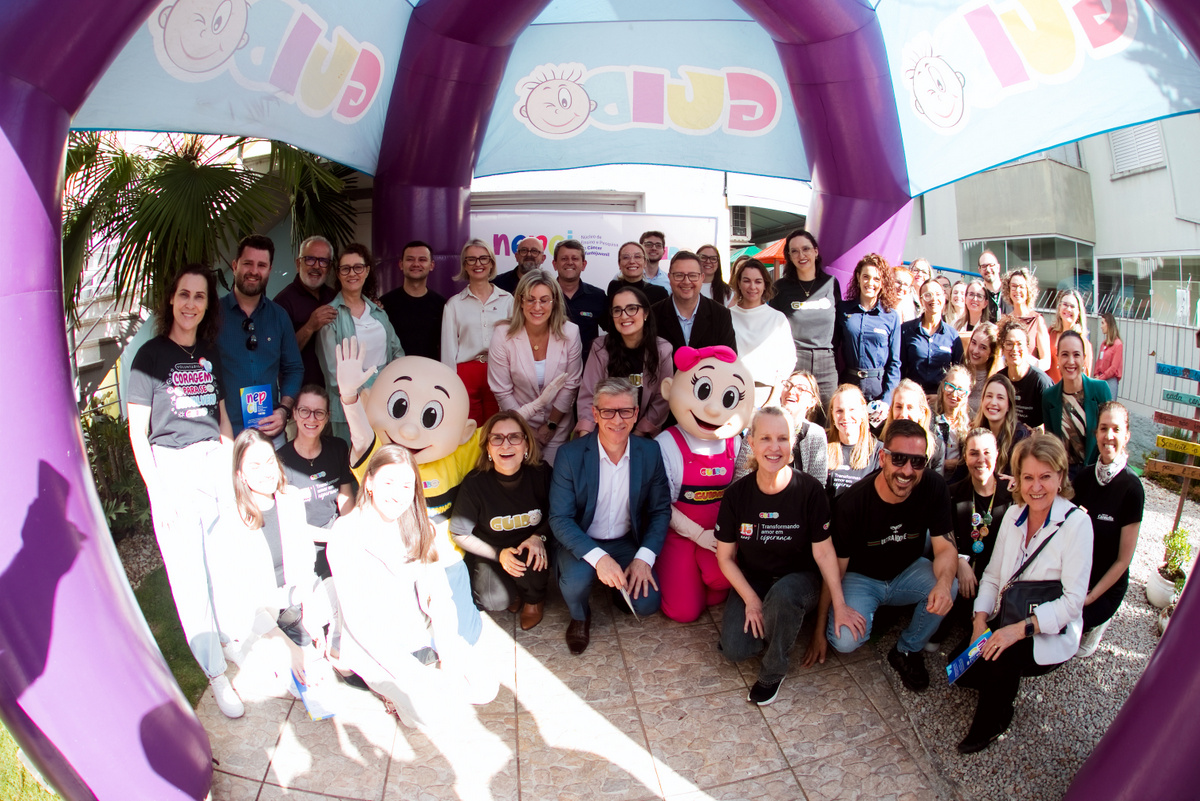
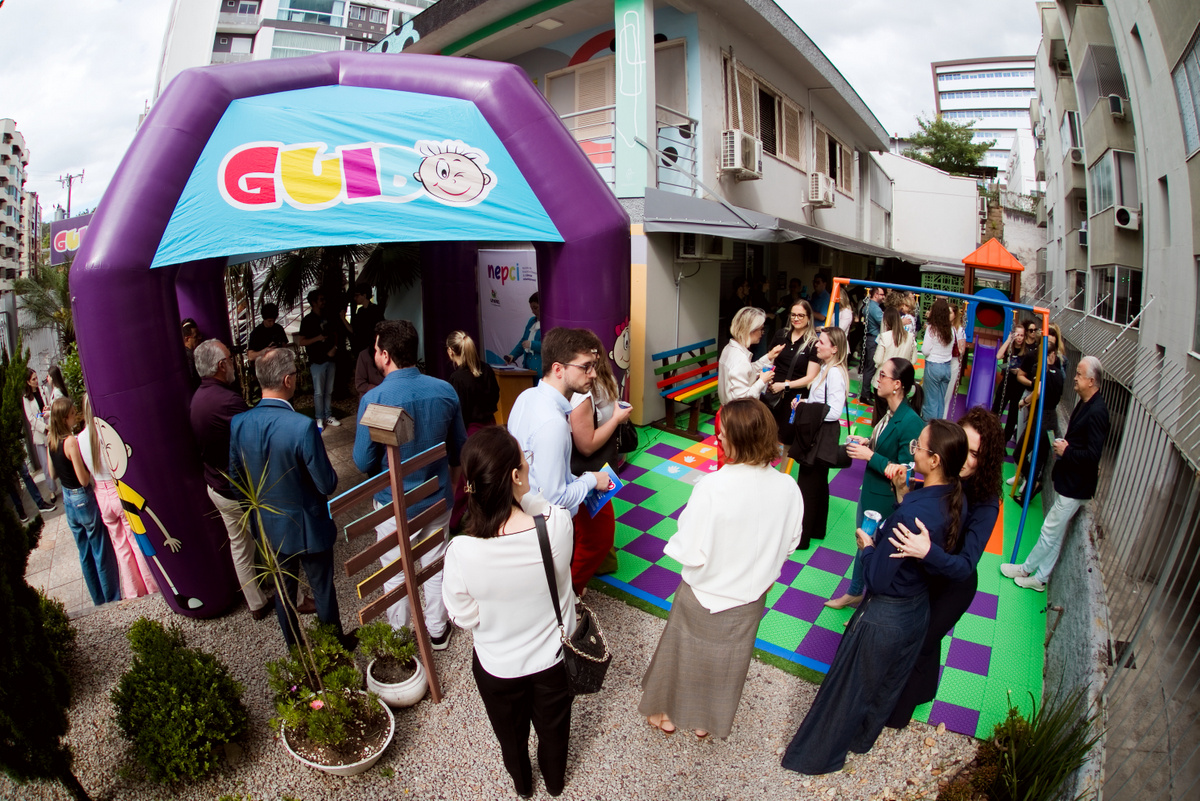
Unesc expanded its research and healthcare initiatives on the afternoon of this Tuesday (11/10), with the official launch of the Childhood and Adolescent Cancer Teaching and Research Center (Nepci). This pioneering initiative arises from the technical, scientific, and care cooperation between the University, Casa Guido, and Hospital São José. The proposal is to transform knowledge into care, bringing academic production closer to the treatment of children and adolescents undergoing oncology care. The ceremony took place at Casa Guido and brought together authorities, volunteers, collaborators, healthcare professionals, researchers, and students.
 Of an inter-institutional nature, Nepci was created to strengthen the pediatric oncology care line in Southern Santa Catarina. The work accompanies the entire journey of facing the disease, from the humanized reception of patients and families to the agility in diagnosis and treatment, including scientific research, attracting promising protocols and clinical trials, and the continuous training of caregivers.
Broadened perspectives
 The initiative, which arose from the desire to expand the institution's role beyond supporting families facing cancer treatment, as stated by the former president of Casa Guido and one of the creators of Nepci, Rogério Campos, was based on many conversations and exchanges of experiences, as well as visits to reference entities in research on this theme.
"Our purpose is the essence of all this work: to increase our survival rate, contribute to science, and bring more hope. We want to ensure that every child diagnosed can grow into a teenager, young adult, and family member, like some of the patients who have passed through here. We want that in 15, 20 years, Hospital São José and Unesc can come here and say: we achieved our goal. We managed to keep more children with their parents," he emphasized.
A purpose initiated with the desire to give back
Recalling the story of Giancarlo, son of the first president of Casa Guido, Otílio Paulo Miranda Pereira, the vice-president of the institution, Mayara Cardoso, highlighted the purpose that began with the couple's desire to give back the kindness they received when they had to face treatment outside their hometown and received genuine help.
"It is important to remember this beginning, what underpins the purpose of being here. In São Paulo, a family that Paulo and Marlene had never met opened their home to them. This kindness sparked the desire to do the same for other families, and thus, with pushes from the universe, the first steps were taken so that today we could be here, soaring to new heights, dreaming bigger, something unimaginable 16 years ago," she commented.
According to Mayara, who represented President Sil Citadin on this occasion, being alongside these partners in the project signifies a fundamental union for the realization of such an expressive project.
"Nepci brings together three forces: Hospital São José, with the structure and team that receives patients and conducts all treatment with great expertise; Unesc, established in research, with knowledge, direct involvement of researchers, health services, and workforce; and Casa Guido, with its incredible team of collaborators and volunteers who know each family by name. We have something precious here that will certainly yield fruits to be celebrated soon," she further emphasized.
Institutions joining forces
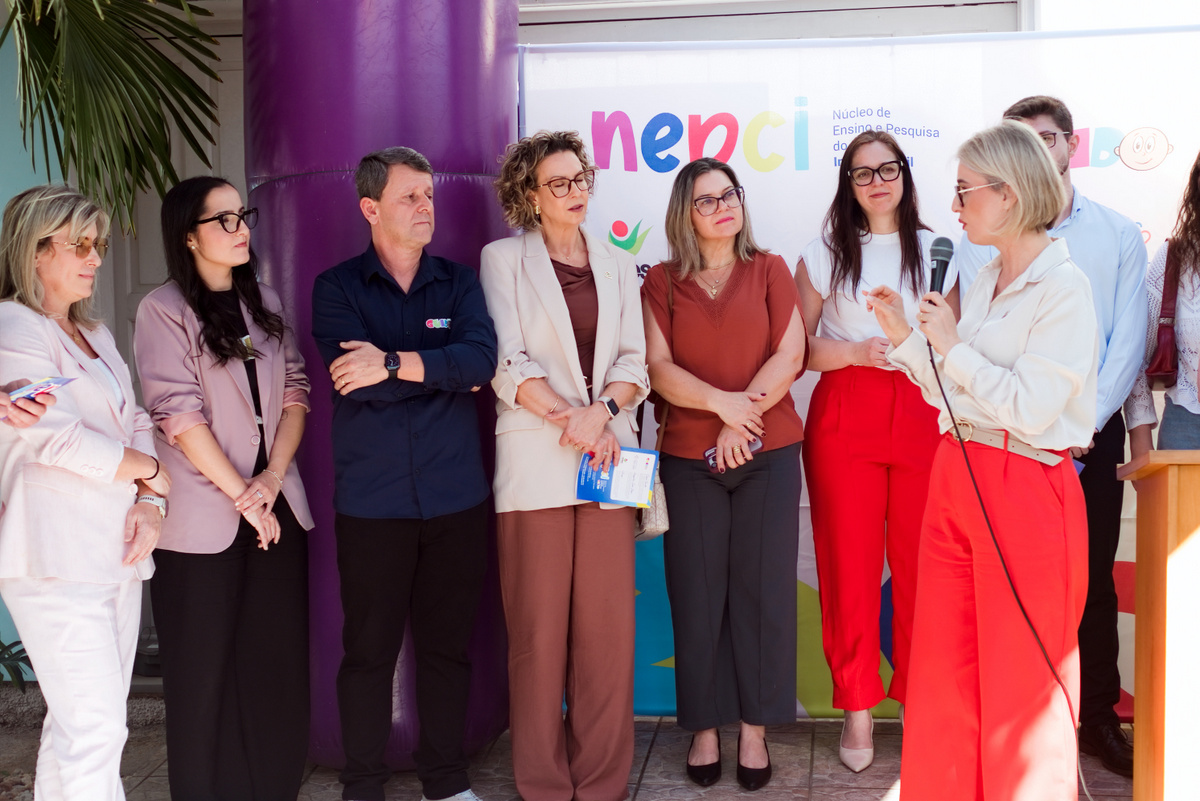 Unesc contributes with methodological and laboratory support, graduate programs, and multidisciplinary care through the project. For the acting rector of the University, Gisele Coelho Lopes, upon receiving the invitation for cooperation, the positive response was immediate.
"When Casa Guido approached us, the first thing we did was accept the invitation and involve our researchers in this idea. Some of them are with us at this moment and represent 130 high-productivity researchers from the university, who 20 days ago placed the institution among the ten best non-state universities in the country in research, a achievement in which the health area plays a leading role," she pointed out.
The partnership, for her, is promising and demonstrates the commitment of the institutions to make a difference in society. "Criciúma and the region are what they are because of the strength of the institutions that, united, strengthen the South, strengthen Santa Catarina, and strengthen Brazil. I have no doubt that this project is just beginning and that you will take this experience to many places," she highlighted.
Research center gaining reinforcement
The trajectory of Hospital São José in oncology began between 1977 and 1978, with adult care, and reached the childhood and adolescent audience starting in 2006. In 2018, the institution became a reference in high complexity in this area for Southern Santa Catarina, which prevented many families from having to travel to Florianópolis, and in 2025 expanded its sector. It is from this history that Nepsi is born, focused on scientific production, professional training, and access to clinical research protocols, bringing assistance closer to science.
According to technical director Cassiana Mazon Fraga, the partnership aligns with the mission of the hospital institution, which goes beyond assistance and also encompasses teaching and research, in which it maintains a long-standing partnership with Unesc.
"The creation of this center, together with Casa Guido, which has a huge importance in the region and in Santa Catarina, strengthens our research center and also shows the importance of the care we provide with such affection in pediatric oncology. Society has everything to gain because research is crucial for us to be able to cure these children," she emphasized.
Knowledge that arrives ahead of time
Responsible for Early Diagnosis and the Education axis of Nepci, Ana Caroline Francisco noted that cancer is a time-dependent disease and that, in the case of children and adolescents, knowledge makes all the difference between the first signs and the confirmation of the disease. Therefore, the team provides training beyond universities and hospitals, working with health and education professionals, businesses, and the community. "We cannot change diagnoses, but we want and can work to ensure that these diagnoses do not come too late," she emphasized.
Leading the Research axis, Liziene Rempel celebrated the new era of Casa Guido, where science becomes a pillar of the institution, and highlighted that the region has health services capable of producing relevant data in pediatric oncology.
According to her, with well-prepared infrastructure and professionals, including at Unesc, patients can access clinical trials without having to travel to major centers like São Paulo and Curitiba. For the coordinator, cooperation unites forces for a common cause, "always with Guido's vision in mind: to increase our cure rate," she added.
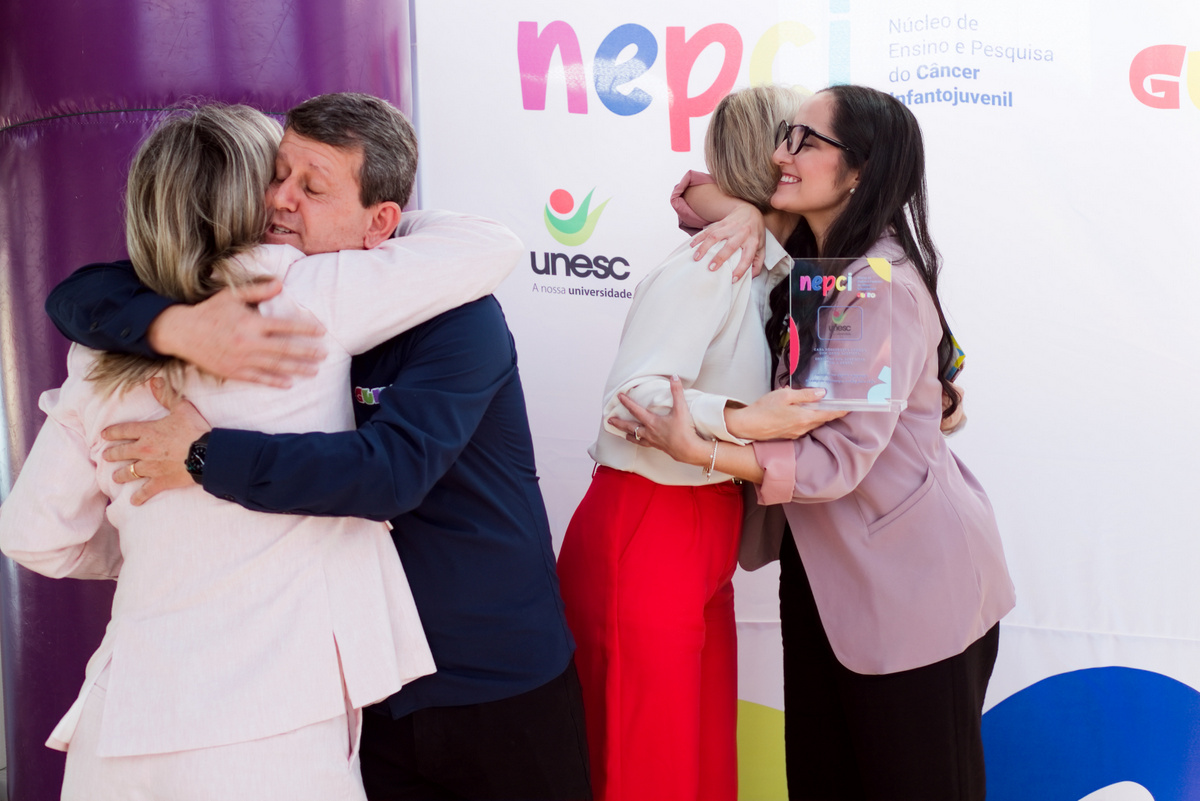
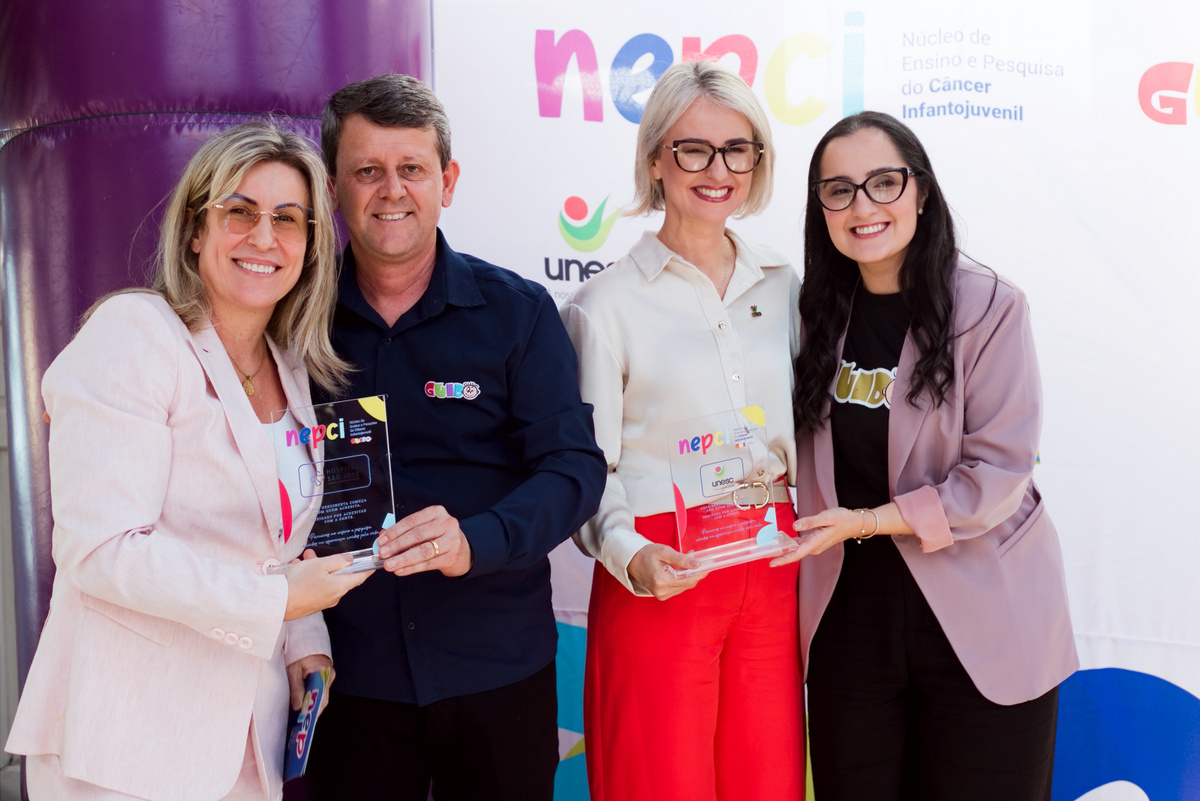
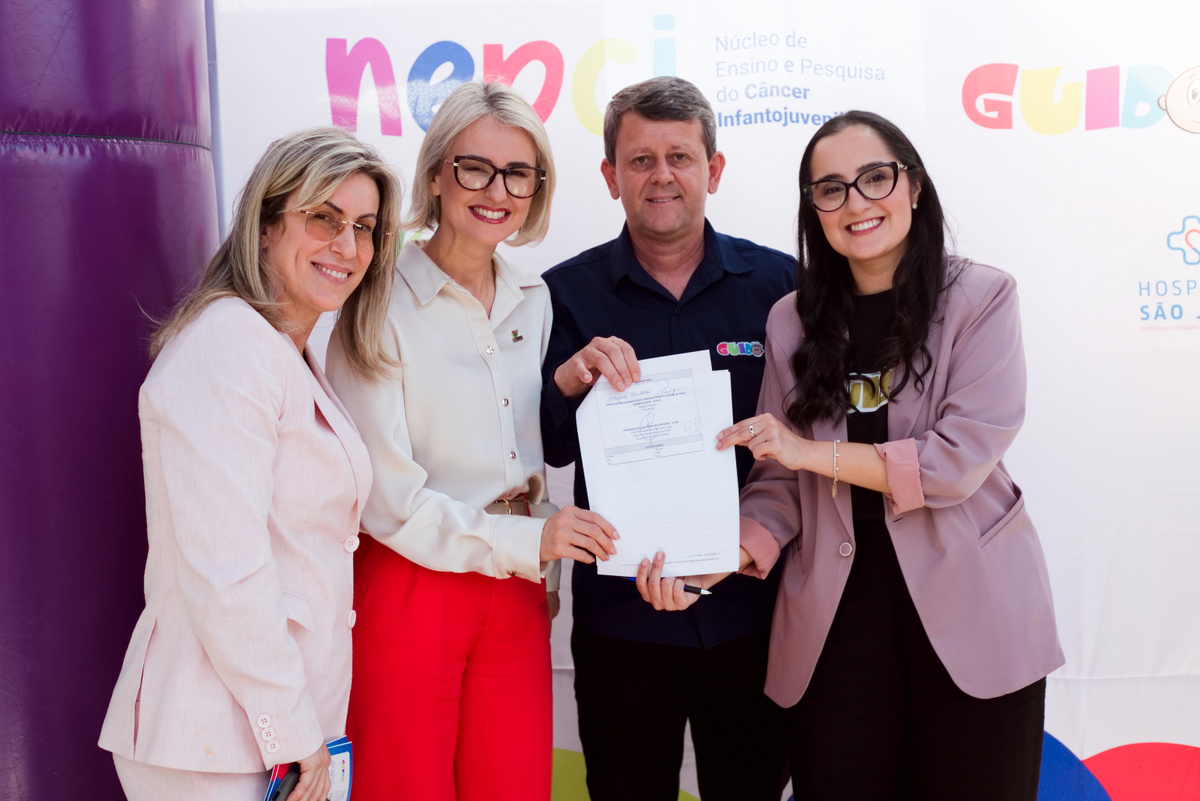
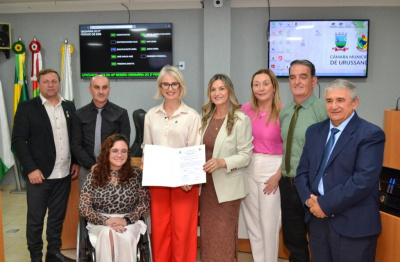
The launch was sealed with a symbolic act that brought together authorities for the signing of the Cooperation Agreement between the institutions. On this occasion, Hospital São José and Unesc also received a tribute from Casa Guido for the partnership that gave rise to Nepci.