Course Presentation
The Bachelor's Degree in Computer Science at Unesc was established in 1997, in line with the university's mission to educate through teaching, research, and extension. It was created to promote the quality and sustainability of the living environment and its vision for the future: "To be recognized as a Community University, excelling in the professional and ethical training of citizens, in the production of scientific and technological knowledge, with a socio-environmental commitment.” Graduates of the Computer Science program will be able to work in companies that develop technological solutions and in any company that has an information technology department.
Differentials
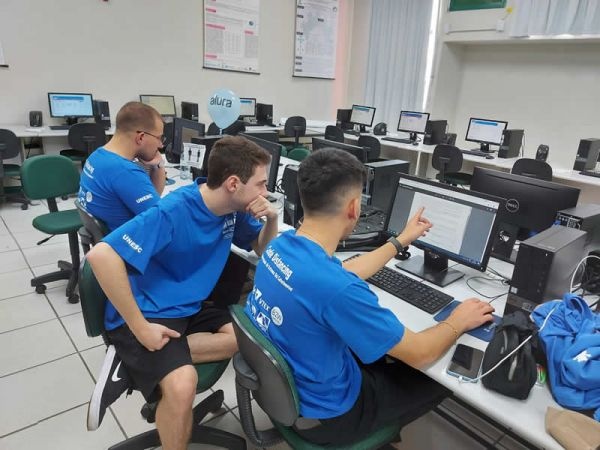
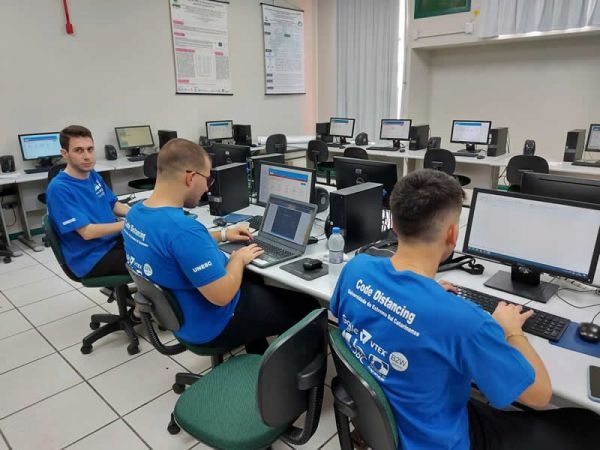
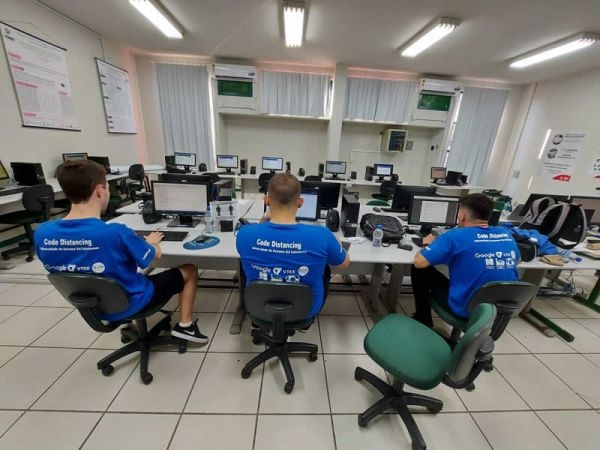
- The Computer Science program is a pioneer in establishing partnerships with the private sector. This project is called Unesc Labs, where companies working with technology are based in the program's computer labs, allowing students to actively participate in this initiative. This innovation makes a significant difference in students' education;
- The faculty of the program consists of masters and doctors in the academic field, as well as professors who work in the productive market;
- Throughout their educational journey, students will have the opportunity for various formative experiences. In every semester, they will engage in teamwork through interdisciplinary projects aimed at bringing students closer to real-world problems faced in the productive market. These projects encompass scientific research and university extension;
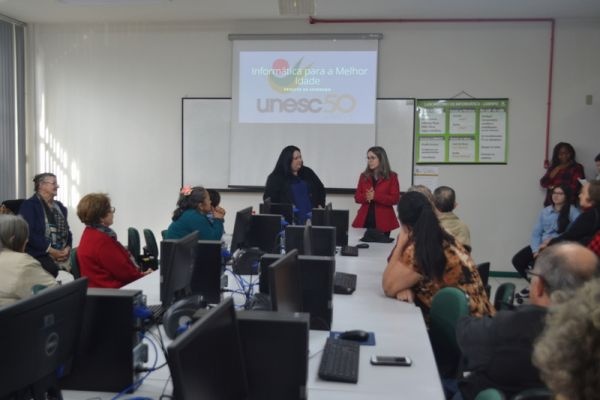
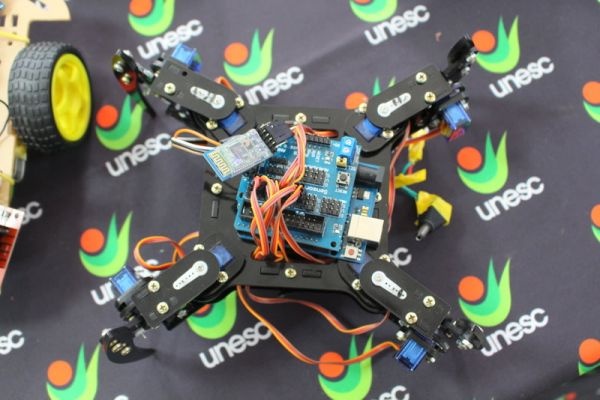
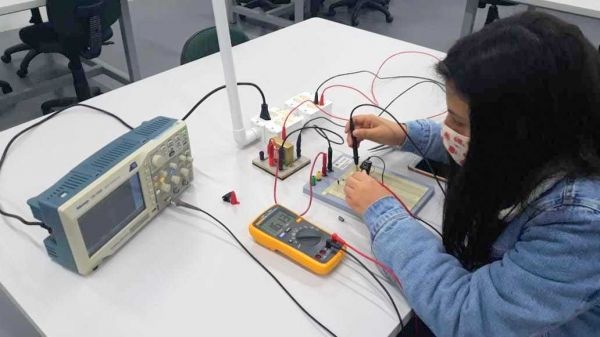
- The program has state-of-the-art computer labs specifically designed to meet the growing demand in the technology field. At the Unesc Technology Park, the program utilizes the Instrumentation Laboratory, where solutions involving the practical use of hardware and software in the construction of Internet of Things projects are developed;
- Internationalization is also present through partnerships with higher education institutions from other countries, allowing students to gain this formative experience during their studies.
What will you learn?
The Bachelor's Degree in Computer Science equips you to utilize knowledge of innovative techniques in the technology and information fields. You will develop a commitment to education and teaching in the field of Information Technology. In the program, you will learn to develop systems for various areas and have the opportunity to create new technologies.
Additionally, students will learn to have commitment and clarity of ideas regarding their ethical-professional stance. They will receive a strong interdisciplinary education, enabling them to become researchers in technological centers.
Job Market
According to the observatory of the Santa Catarina Association of Technology (Acate), the state of Santa Catarina generates approximately R$ 15.8 billion, representing 5.8% of the state's GDP. In this amount, 11,200 companies contribute to the development of technology in Santa Catarina. Half of them were established in the last four years.
With 51,800 employees, Santa Catarina is the 4th largest hub in the Technology sector in Brazil, behind only the three most populous states (SP, MG, and RJ). Another relevant fact is that the state ranks second in terms of students with higher education in technology-related courses. Even in a low-growth scenario, the number of companies has doubled in the last three years.
Subjects
Academic Exclusive
[title-dropdown]Complementary Activities[/title-dropdown]
[content-dropdown]Complementary Activities, or AC, are mandatory teaching, research, and extension actions, with a defined workload in your course's curriculum matrix, to be developed by you, student, during your educational journey, realized through academic, scientific, cultural, sports, artistic, and technological innovation activities.
The purpose of Complementary Activities is to provide flexibility in the course curriculum and to offer you, the student, the opportunity for thematic and interdisciplinary deepening beyond the subjects, programs, and projects that make up the pedagogical project of the course, adding value to your academic training.
Regulation of complementary activities
[/content-dropdown]
[title-dropdown]Final Paper[/title-dropdown]
[content-dropdown]...
[/content-dropdown]
[title-dropdown]Library[/title-dropdown]
[content-dropdown]
The Central Library Prof. Eurico Back – UNESC, has the mission to "Promote quality information retrieval, focusing on the development of teaching, research, and extension activities, associating technology and humanized service."
With free access to the shelves, the Library is located in an area of 2,688.50 m². The service hours are from Monday to Friday, from 7:30 AM to 10:00 PM, and on Saturdays from 8:00 AM to 1:00 PM.
The collection of books, periodicals, and multimedia, as well as the services of technical processing, consultation of the local database, registration of periodicals, loan, renewal, return, and reservation are fully computerized by the PERGAMUM Program, which was developed by the Data Processing Center of PUC/Paraná - PUCPR. The location of the works is organized by author, title, subject, or keyword.
The Collection Development Policy of the Central Library aims to define and implement criteria for the development of collections and the updating of the collection.
The Library's collection consists of 82,668 titles and 167,836 volumes of books, has 63 subscriptions to periodicals, and provides access to over 100 databases through the CAPES Periodicals Portal and other publicly accessible databases. It has a subscription to Minha Biblioteca, a database with over 11,000 e-books, in addition to the UpToDate and RT-Online databases.
[/content-dropdown]
[title-dropdown]Periodicals and Databases[/title-dropdown]
[content-dropdown]
-
...
-
...
-
...
[/content-dropdown]
[title-dropdown]Internship[/title-dropdown]
[content-dropdown]
Access here the Internship website
[/content-dropdown]
Coordination
Meet the course coordinators:-
Luciano AntunesCoordinator
-
Rogério Antônio CasagrandeDeputy Coordinator
Ratings Ranking

3
grade
CPC
3
grade
CC
WHAT IS IT LIKE TO STUDY HERE?
Step into the world of the course
Press play on the video