Course Presentation
The Bachelor’s Degree in Business Administration with a Focus on International Trade at UNESC prepares professionals to operate in a competitive, technological, and borderless environment. Here, students learn to understand how organizations function from a global perspective, developing skills to plan, negotiate, and manage international operations ethically, sustainably, and innovatively.
With a 3,000-hour in-person curriculum that can be completed in four years, the program combines management, economics, and international relations in a formative journey marked by practical experience and integration with the market. The curriculum is designed to connect teaching, research, and extension, promoting real experiences in export, import, finance, and global logistics, in an academic environment that encourages leadership, initiative, and strategic vision.
Differentiators
- UNESC stands out by offering a contemporary education connected to the trends of global trade and the digital economy. Here, learning goes far beyond the classroom: students experience real situations, participate in practical projects, and connect with companies and institutions operating in the international arena;
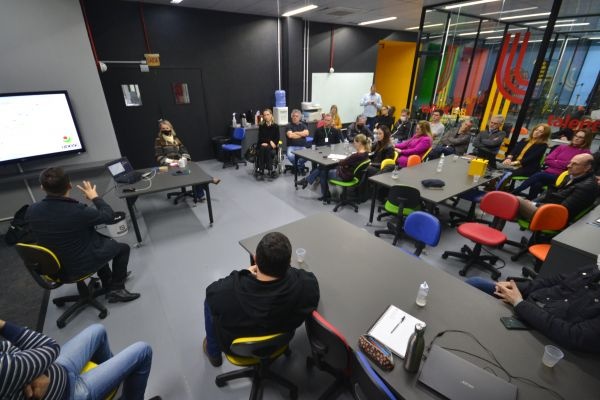
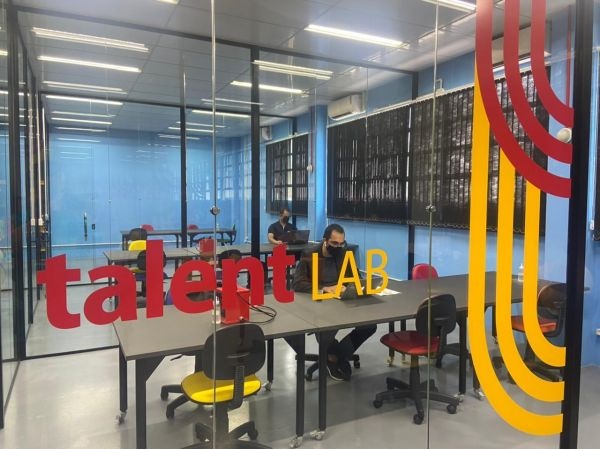
- From the first semesters, students have access to practical experience laboratories and participate in integrative projects that simulate export and import operations, strengthening their analytical and decision-making skills. The program offers extensive opportunities for internationalization and academic mobility, with multicultural experiences and exchange programs at foreign universities;
- Integration with the innovation ecosystem — including startups, technology-based companies, and partner institutions — broadens the professional horizon of students, bringing academic training closer to the realities of the global market;
- The faculty consists of masters and doctors with solid professional and academic experience, active in areas such as international business, finance, global marketing, and corporate governance. Digital fluency, the use of active and agile methodologies, and state-of-the-art infrastructure ensure a dynamic, collaborative learning process connected to contemporary demands;
- Recognized for its academic excellence and outstanding results in national assessments, the program maintains high indicators in ENADE and CPC, establishing itself as a regional and national reference in training professionals for international trade;
- Therefore, UNESC is the ideal place for those who wish to build a solid international career, combining innovation, ethics, and sustainability with the practice of global management.
What will you learn?
- In the Bachelor’s Degree in Business Administration with a Focus on International Trade at UNESC, you will learn to think strategically and act globally. The program is designed to develop the technical, analytical, and behavioral skills essential for those who wish to operate in the world of international trade, connecting management, economics, finance, and global relations.
- You will also learn to structure export and import operations, mastering the Brazilian Customs System, operational dispatch procedures, economic integration policies, and international agreements. The courses on Export Systematics, Import Systematics, Internationalization Strategies, and Export and Import Laboratories transform theory into practice, allowing students to simulate real operations and experience the day-to-day of global trade.
Job Market
The international business landscape is experiencing a moment of expansion and transformation — and the professional trained by UNESC is ready to be a leader in this movement.
With an analytical, creative, and ethical profile, graduates of the Bachelor’s Degree in Business Administration with a Focus on International Trade are prepared to work in multinational companies, financial institutions, government agencies, chambers of commerce, ports, logistics operators, startups, and international consultancies.
The program prepares students to understand global economic trends, the interdependence between markets, and the impacts of emerging technologies on supply and value chains. This strategic vision allows graduates to assume prominent positions in international operations management, import and export, finance, and digital trade.
With the skills acquired throughout their education — international negotiation, executive leadership, global governance, and sustainable innovation — UNESC professionals are recognized for their ability to generate results and turn challenges into opportunities, operating fluently in an interconnected and competitive world.
More than just earning a diploma, UNESC graduates achieve a global career positioning, prepared to be transformative leaders in international economic relations.
Subjects
| Fundamentals of Marketing |
| Organization, Systems and Methods |
| Formative Laboratory I: Our Place and the Future |
| Quantitative Methods |
| General Theory of Administration |
| International Marketing |
| International Negotiation and Conflict Management |
| Business Ecosystem Development |
| Fundamentals of Management for International Business |
| Statistics |
| Environmental and Quality Management |
| Human Resource Management |
| International Logistics |
| General Introduction to Law |
| Financial Mathematics |
| Customs Legislation |
| Branding |
| Internationalization Strategies |
| Operations Management |
| Financial and Investment Analysis |
| Export Systematics |
| Emerging Topics: Marketing |
| Fundamentals of Economics |
| Export Laboratory |
| Ethics and Compliance |
| Business Accounting |
| Agile Project Management Methodologies |
| Emerging Topics: Human Resource Management |
| Retail and Service Management |
| Controllership |
| Corporate Finance |
| Knowledge Management and Competitive Intelligence |
| Import Systematics |
| Emerging Topics: Production and Operations Management |
| Labor and Tax Law |
| Strategic Management |
| Corporate Governance and Succession Process |
| Formative Laboratory: Creativity and Entrepreneurial Culture |
| Import Laboratory |
| Emerging Topics: Finance |
| Academic Production I |
| Business Consulting |
| Academic Production II |
| Formative Lab III: Elective |
| International Business Lab |
| Personal Branding |
[dropdown-title]Electives[/dropdown-title]
[dropdown-content]
| Small Business Management |
| Service Management |
| Strategic Management |
| Public Administration |
| Investment Analysis |
| Associativism |
| Coaching |
| Accounting for Managers |
| Contextualization - Case Studies |
| E-Business |
| E-Commerce |
| Brazilian Economy |
| Technical Spanish |
| Geopolitics |
| Project Management |
| Environmental and Quality Management |
| Process Management |
| Technical English |
| Technical English |
| Computer Science |
| Brazilian Sign Language |
| Budgeting |
| Operations Research |
| Business Plans |
| Text Production and Interpretation |
| Text Production for Monographic Works |
| Human Resources |
| Social Responsibility |
| Business Simulation |
| Applied Computing Systems in Administration |
Academic Exclusive
[title-dropdown]Complementary Activities[/title-dropdown]
[content-dropdown]Complementary Activities, or AC, are mandatory teaching, research, and extension actions, with a defined workload in your course's curriculum, to be developed by you, student, throughout your educational journey, realized through academic, scientific, cultural, sports, artistic, and technological innovation activities.
The purpose of Complementary Activities is to provide flexibility in the course curriculum and to offer you, the student, the opportunity for thematic and interdisciplinary deepening beyond the subjects, programs, and projects that make up the pedagogical project of the course, adding value to your academic training.
Regulation of complementary activities
[/content-dropdown]
[title-dropdown]Thesis[/title-dropdown]
[content-dropdown]...
[/content-dropdown]
[title-dropdown]Library[/title-dropdown]
[content-dropdown]
The Central Library Prof. Eurico Back – UNESC, has the mission to "Promote quality information retrieval, focusing on the development of teaching, research, and extension activities, associating technology and humanized service."
With free access to the shelves, the Library is located in an area of 2,688.50 m². The service hours are from Monday to Friday, from 7:30 AM to 10:00 PM, and on Saturdays from 8:00 AM to 1:00 PM.
The collection of books, periodicals, and multimedia, as well as the services of technical processing, consultation of the local database, registration of periodicals, loan, renewal, return, and reservation are fully computerized by the PERGAMUM Program, which was developed by the Data Processing Center of PUC/Paraná - PUCPR. The location of the works is organized by author, title, subject, or keyword.
The Collection Development Policy of the Central Library aims to define and implement criteria for the development of collections and the updating of the collection.
The Library's collection consists of 82,668 titles and 167,836 volumes of books, has 63 subscriptions to periodicals, and access to more than 100 databases through the CAPES Periodicals Portal and other publicly accessible databases. It has a subscription to Minha Biblioteca, a database with over 11,000 e-books, in addition to the UpToDate and RT-Online databases.
[/content-dropdown]
[title-dropdown]Periodicals and Databases[/title-dropdown]
[content-dropdown]
-
...
-
...
-
...
[/content-dropdown]
Coordination
Meet the course coordinators:-
Thiago Henrique Almino FranciscoCoordinator
-
Edson Firmino RibeiroDeputy Coordinator
Ratings Ranking

3
grade
CPC
4
grade
CC
WHAT IS IT LIKE TO STUDY HERE?
Step into the world of the course
Press play on the video

.jpg)