Course Presentation
The undergraduate program in Architecture and Urbanism emphasizes an academic education that provides a broad understanding of the field. The goal is to train professionals capable of understanding and translating individual and collective needs related to their professional area. In the pursuit of understanding and addressing the demands of contemporary society, whether from an economic or cultural perspective, it works towards the civic formation of a flexible, innovative, competent professional committed to collective interests.
This education is structured around two fundamental concepts: the semester theme-problem (interdisciplinary perspective) and the Integrated Workshop System (integration of the teaching-learning process of design throughout the course across different phases).
Differentials
- Integrated disciplines, with the main discipline being Architecture and Urbanism Design, applied from the first to the eighth semester;
- Partnership with the Architecture program at the National University of La Plata, Argentina;
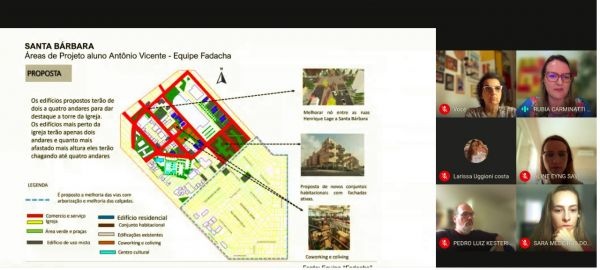
- Opportunity to work in different fields, such as spatial solutions for urban and architectural problems in the southernmost cities of Santa Catarina;
- Participation in academic weeks and academic trips, both nationally and internationally;
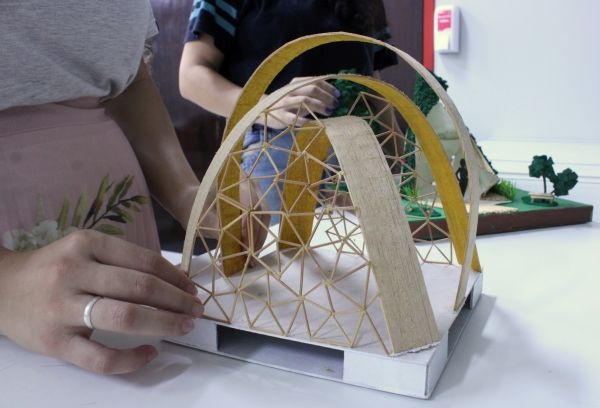
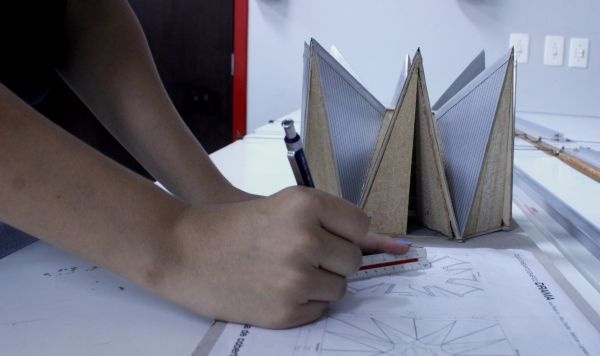
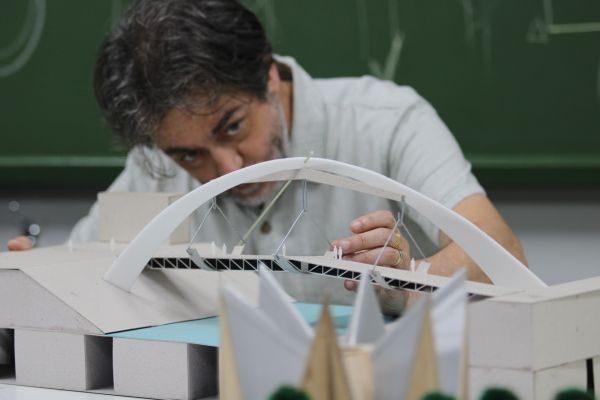
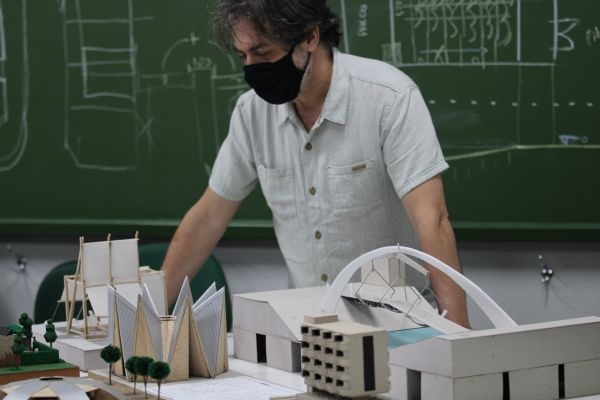
- Laboratories that support the complementing of classroom teaching activities, such as the Model Laboratory, the Computer Laboratory, the Environmental Comfort Laboratory, the Theory and History Laboratory, in addition to the Projects Laboratory, which facilitates the student's engagement with extension and research;
- Highly qualified faculty composed of doctors, masters, and specialists working in the field;
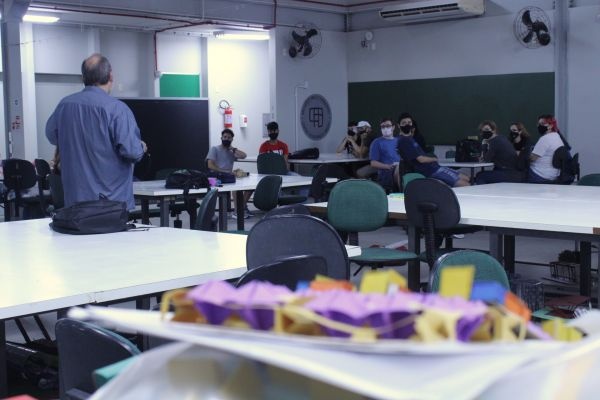
- The didactic-pedagogical proposal focuses on project exercise activities developed in the vertical studio, a common space shared by all phases. It is the place where theory, technology, and art meet to underpin the practice of architectural and urban design.
What will you learn?
The undergraduate program in Architecture and Urbanism prepares you to work in the preservation of architecture, urbanism, and landscape as collective heritage and responsibility. The course provides tools to work on the quality of life of inhabitants in human settlements and the material quality of the built environment and its durability.
Additionally, you will learn to use technology in respect to the social, cultural, aesthetic, and economic needs of communities. You will learn to address concepts related to the sustainable development of both the natural and built environments.
Job Market
The bachelor's degree in Architecture and Urbanism allows you to work in various areas of the market. The focus is on being a professional capable of understanding socio-spatial complexity and developing a committed civic practice within your technical-scientific specificity.
You may engage in fields such as supervision, guidance, coordination, planning, design, specification, management, execution of works, consulting, inspection, and evaluation in architectural ensembles, interior architecture, urbanism, urban and regional planning, and landscaping. You can also work as a freelance or self-employed professional in both public and private sectors.
Subjects
[dropdown-title]Matrix 5 Morning[/dropdown-title]
[dropdown-content]
Matrix 4 Morning
ARCHITECTURE, URBANISM AND LANDSCAPING PROJECT - STUDY OF FORM
OBSERVATIONAL DRAWING
DESCRIPTIVE GEOMETRY
MODEL MAKING
HISTORY AND THEORY OF ART AND ARCHITECTURE I
MATHEMATICAL FOUNDATIONS
ARCHITECTURE, URBANISM AND LANDSCAPING PROJECT - EXPERIMENTATION AND CONSTRUCTION SITE
ARCHITECTURAL DRAWING
INTRODUCTION TO CARTOGRAPHY AND TOPOGRAPHY
FOUNDATIONS OF URBANISM
CONSTRUCTION MATERIALS AND TECHNIQUES
BUILT ENVIRONMENT AND ERGONOMICS
CONSTRUCTION EXPERIMENTS
HISTORY AND THEORY OF ART AND ARCHITECTURE II
ARCHITECTURE, URBANISM AND LANDSCAPING PROJECT - SINGLE-FAMILY HOUSING
THEORY AND METHODOLOGY OF DESIGN
PERSPECTIVE AND SHADOWS
THEORY AND AESTHETICS OF ARCHITECTURE I
HISTORY AND THEORY OF THE CITY AND URBAN FORM I
LANDSCAPING I
INTRODUCTION TO STRUCTURAL SYSTEMS
HISTORY AND THEORY OF ART AND ARCHITECTURE III
ARCHITECTURE, URBANISM AND LANDSCAPING PROJECT - SINGLE-FAMILY HOUSING COMPLEX
GRAPHIC COMPUTING I
GEOPROCESSING
STRUCTURAL SYSTEMS IN WOOD
THERMAL COMFORT
HISTORY AND THEORY OF ART AND ARCHITECTURE IV
HISTORY AND THEORY OF THE CITY AND URBAN FORM II
LANDSCAPING II
ARCHITECTURE, URBANISM AND LANDSCAPING PROJECT - MULTIFAMILY HIGH-RISE BUILDINGS
VISUAL COMMUNICATION IN ARCHITECTURE AND URBANISM
HISTORY AND THEORY OF BRAZILIAN ART AND ARCHITECTURE
HERITAGE I
POPULAR URBAN SETTLEMENTS
STRUCTURAL SYSTEMS IN CONCRETE
BUILDING SYSTEMS: HYDRAULICS
BUILDING SYSTEMS: ELECTRICAL
SCIENTIFIC METHODOLOGY AND RESEARCH - DISTANCE LEARNING
GRAPHIC COMPUTING II
ARCHITECTURE, URBANISM AND LANDSCAPING PROJECT - MULTIFUNCTIONAL COMPLEX BLOCK
URBAN SOCIOLOGY
URBAN ENVIRONMENTAL ANALYSIS
URBAN INFRASTRUCTURE SYSTEMS
STRUCTURAL SYSTEMS IN STEEL
ACOUSTIC AND LIGHTING COMFORT
THEORY AND AESTHETICS OF ARCHITECTURE II
HERITAGE II
ARCHITECTURE, URBANISM AND LANDSCAPING PROJECT - COMMUNITY FACILITY
INTERIOR ARCHITECTURE
CRITICAL ANALYSIS OF ARCHITECTURE
URBAN STUDIES
LANDSCAPE STUDIES
URBAN PLANNING AND MANAGEMENT
INDUSTRIALIZED STRUCTURAL SYSTEMS
ELECTIVE I
ARCHITECTURE, URBANISM AND LANDSCAPING PROJECT - URBAN PROJECT
EXECUTIVE PROJECT
PROJECT DETAILING
THEORETICAL HISTORICAL ESSAY ON ARCHITECTURE, URBANISM AND LANDSCAPING
ENVIRONMENTAL PSYCHOLOGY
CRITICAL ANALYSIS OF URBANISM
ALTERNATIVE CONSTRUCTION SYSTEMS
PROJECT COORDINATION
ELECTIVE II
COURSE WORK I
SUPERVISED INTERNSHIP I
LEGISLATION AND PROFESSIONAL ETHICS
PROFESSIONAL ORGANIZATION AND PRACTICE
CONSTRUCTION MANAGEMENT
ELECTIVE III
COURSE WORK II
Matrix 1 Evening
(NCI)-FORMATIVE LAB I: OUR PLACE AND THE FUTURE
DRAWING AND PLASTICS
DESCRIPTIVE GEOMETRY
HISTORY AND THEORY OF ARCHITECTURE I
INTRODUCTION TO ARCHITECTURE AND URBANISM
PAUP I - CONSTRUCTIVE EXPERIMENTS
GRAPHIC COMPUTING I
HISTORY AND THEORY OF ARCHITECTURE II
CONSTRUCTION MATERIALS AND TECHNIQUES
PAUP II - SINGLE-FAMILY RESIDENCE
CARTOGRAPHY AND TOPOGRAPHY
HISTORY AND THEORY OF ARCHITECTURE III
INTRODUCTION TO STRUCTURAL SYSTEMS
HISTORY AND THEORY OF THE CITY I
PAUP III - SINGLE-FAMILY RESIDENTIAL COMPLEX
GRAPHIC COMPUTING II
HISTORY AND THEORY OF BRAZILIAN ARCHITECTURE
STRUCTURAL SYSTEMS IN CONCRETE
POPULAR SETTLEMENTS
(NCI)-FORMATIVE LAB II
PAUP IV - MULTIFUNCTIONAL BUILDING
HERITAGE
ENVIRONMENTAL COMFORT I
HISTORY AND THEORY OF THE CITY II
PAUP V - MULTIFUNCTIONAL COMPLEX
THEORY AND AESTHETICS OF ARCHITECTURE
BUILDING SYSTEMS
LANDSCAPING
URBAN PLANNING AND MANAGEMENT
PAUP VI - INSTITUTIONAL BUILDING
CRITICAL ANALYSIS OF ARCHITECTURE
ENVIRONMENTAL COMFORT II
STRUCTURAL SYSTEMS IN STEEL AND WOOD
URBAN STUDIES
PAUP VII - URBAN PROJECT
THEORETICAL ESSAY
INDUSTRIALIZED STRUCTURAL SYSTEMS
CRITICAL ANALYSIS OF URBANISM
URBAN INFRASTRUCTURE SYSTEMS
FINAL UNDERGRADUATE PROJECT I
INTERIOR ARCHITECTURE
EXECUTIVE PROJECT AND DETAILING
LEGISLATION AND PROFESSIONAL ETHICS
COORDINATION AND PROJECT COMPATIBILITY
TOPICS IN ARCHITECTURE AND URBANISM
(NCI)-FORMATIVE LAB III
FINAL UNDERGRADUATE PROJECT II
SUPERVISED INTERNSHIP
Academic Exclusive
[title-dropdown]Complementary Activities[/title-dropdown]
[content-dropdown]Complementary Activities, or AC, are mandatory teaching, research, and extension actions, with a defined workload in your course's curriculum, to be developed by you, student, during your educational journey, realized through academic, scientific, cultural, sports, artistic, and technological innovation activities.
The purpose of Complementary Activities is to provide flexibility in the course curriculum and to offer you, the student, the opportunity for thematic and interdisciplinary deepening beyond the subjects, programs, and projects that make up the pedagogical project of the course, adding value to your academic training.
Regulation of complementary activities
Awaiting publication
[/content-dropdown]
[title-dropdown]Final Project[/title-dropdown]
[content-dropdown]...
[/content-dropdown]
[title-dropdown]Library[/title-dropdown]
[content-dropdown]
The Central Library Prof. Eurico Back – UNESC, has the mission to “Promote quality information retrieval, focusing on the development of teaching, research, and extension activities, combining technology and humanized service.”
With free access to the shelves, the Library is located in an area of 2,688.50 m². The service hours are from Monday to Friday, from 7:30 AM to 10:00 PM, and on Saturdays from 8:00 AM to 1:00 PM.
The collection of books, periodicals, and multimedia, as well as the services of technical processing, consultation of the local database, registration of periodicals, loan, renewal, return, and reservation are fully computerized by the PERGAMUM Program, which was developed by the Data Processing Center of PUC/Paraná - PUCPR. The location of the works is organized by author, title, subject, or keyword.
The Collection Development Policy of the Central Library aims to define and implement criteria for the development of collections and the updating of the collection.
The Library's collection consists of 82,668 titles and 167,836 volumes of books, has 63 subscriptions to periodicals, and provides access to over 100 databases through the CAPES Periodicals Portal and other publicly accessible databases. It has a subscription to Minha Biblioteca, a database with over 11,000 e-books, in addition to the UpToDate and RT-Online databases.
[/content-dropdown]
[title-dropdown]Periodicals and Databases[/title-dropdown]
[content-dropdown]
-
...
-
...
-
...
[/content-dropdown]
[title-dropdown]Internship[/title-dropdown]
[content-dropdown]
Access here the Internship website
[/content-dropdown]
Coordination
Meet the course coordinators:-
Aline Eyng SaviCoordinator
-
Pedro Luiz Kestering MedeirosDeputy Coordinator
Ratings Ranking

3
grade
CPC
4
grade
CC
WHAT IS IT LIKE TO STUDY HERE?
Step into the world of the course
Press play on the video