Course Overview
The undergraduate program in Biological Sciences offers a curriculum that studies living organisms, their relationships with each other and the environment, as well as understanding the processes and mechanisms that regulate life, with an emphasis on improving environmental quality. Graduates of this program possess social sensitivity and concern for environmental balance, using their knowledge to contribute to the solution of socio-environmental problems.
Differentials
- It is aligned with the Federal Council of Biology Resolutions No. 300, dated December 7, 2012, which establishes the minimum requirements for Biologists to work in research, projects, analyses, expert assessments, inspections, and the issuance of reports and opinions;
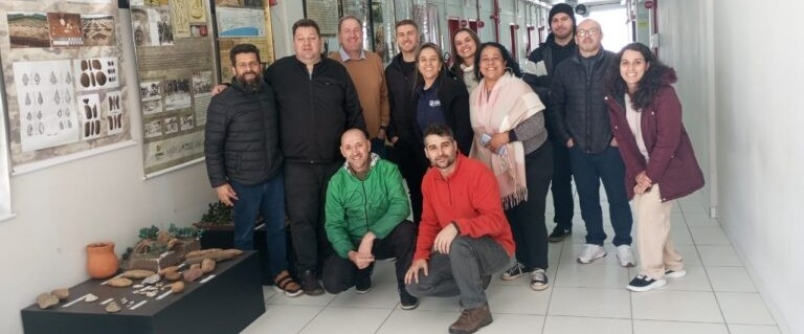
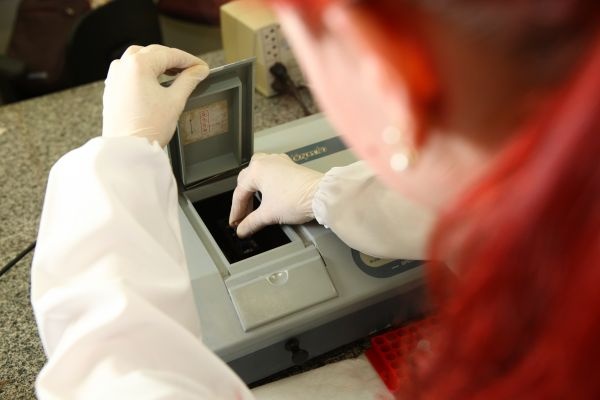
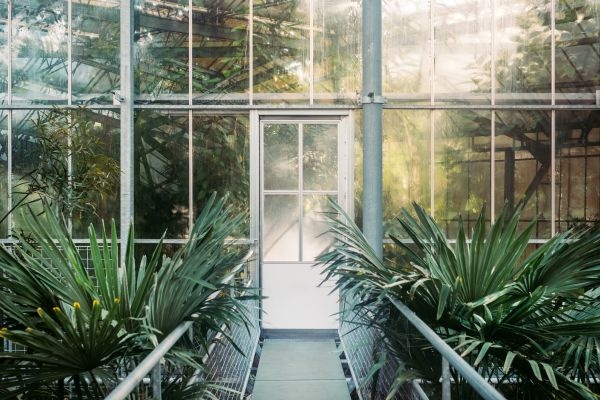
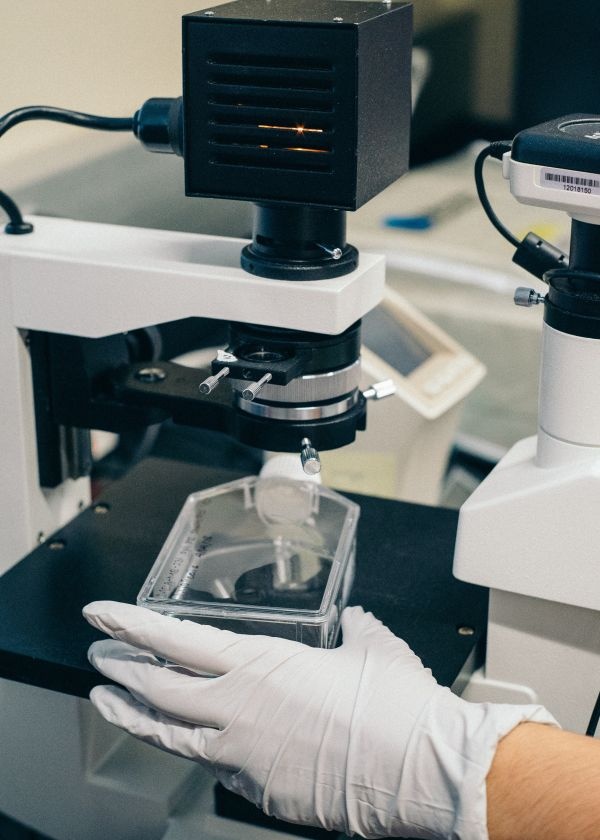
- Infrastructure includes a library, herbarium, forest nursery, zoology unit, laboratories for IPAT, computer science, Animal-Plant Interaction, landscape ecology and vertebrates, chemistry, anatomy, biochemistry, biophysics, microscopy, botany, and science and biology education;
- Highly qualified faculty, composed of doctors and masters.
What will you learn?
The Bachelor’s degree in Biological Sciences prepares you to assess the impact of anthropogenic activities in social and environmental contexts, ensuring that projects and products are viable and sustainable at all stages. Additionally, you will be qualified to work in the fields of genetics, botany, zoology, histology, natural resource management (fauna and flora), environmental education, and microbiology.
Job Market
The Bachelor’s degree in Biological Sciences allows you to work in various areas of the job market. Professionals, with social sensitivity and concern for environmental balance, use their knowledge to contribute to the solution of socio-environmental problems.
You can work in scientific research, consulting, expert assessments, technical advice, research centers, laboratories, museums, ecological parks, botanical gardens, and biological reserves.
Subjects
| Foundational Laboratory I |
| Cell Biology |
| Animal Embryology and Histology |
| History and Philosophy of Science |
| Introduction to Biological Sciences, Bioethics, and Professional Legislation |
| Foundational Laboratory II |
| Plant Anatomy and Morphology |
| Chemistry for Biological Sciences |
| Biophysics |
| Introduction to the Study of Living Beings |
| Invertebrate Zoology I |
| Environmental Analytical Chemistry |
| Geology |
| Systematic Botany I |
| Biochemistry |
| Genetics |
| Invertebrate Zoology II |
| Systematic Botany II |
| Organism and Population Ecology |
| Population Genetics |
| Techniques in Molecular Biology |
| Ecotoxicology |
| Vertebrate Zoology I |
| Internship I |
| Community and Ecosystem Ecology |
| Plant Physiology |
| Environmental Management |
| Vertebrate Zoology II |
| Internship II |
| Evolution |
| Biostatistics |
| Animal-Plant Interaction |
| Field Practice in Zoology |
| Research Project in Biological Sciences |
| Comparative Animal Physiology |
| Field Practice in Botany |
| Internship III |
| Economic Botany |
| Restoration Ecology |
| Final Project I |
| Ethnobiology |
| Environmental Law |
| Environmental Licensing |
| Landscape Ecology |
| Final Project II |
| Photo Interpretation and Geoprocessing |
| Environmental Education |
Academic Exclusive
Discover the Biological Sciences program
Complementary Activities
Complementary Activities, or AC, are mandatory actions in teaching, research, and extension, with a defined workload in your program's curriculum, to be developed by you, student, throughout your educational journey, realized through academic, scientific, cultural, sports, artistic, and technological innovation activities.
The purpose of Complementary Activities is to provide flexibility in the program's curriculum and to offer you, the student, the opportunity for thematic and interdisciplinary deepening beyond the subjects, programs, and projects that make up the pedagogical project of the program, adding value to your academic training.
The purpose of Complementary Activities is to provide flexibility in the program's curriculum and to offer you, the student, the opportunity for thematic and interdisciplinary deepening beyond the subjects, programs, and projects that make up the pedagogical project of the program, adding value to your academic training.
Thesis
...
Library
The Central Library Prof. Eurico Back – UNESC, has the mission to “Promote quality information retrieval, focusing on the development of teaching, research, and extension activities, combining technology and humanized service.”
With free access to the shelves, the Library is located in an area of 2,688.50 m². The service hours are from Monday to Friday, from 7:30 AM to 10:00 PM, and on Saturdays from 8:00 AM to 1:00 PM.
The collection of books, periodicals, and multimedia, as well as the services of technical processing, local database consultation, periodical registration, loan, renewal, return, and reservation are fully computerized by the PERGAMUM Program, which was developed by the Data Processing Center of PUC/Paraná - PUCPR. The location of the works is organized by author, title, subject, or keyword.
The Collection Development Policy of the Central Library aims to define and implement criteria for the development of collections and the updating of the collection.
The Library's collection consists of 82,668 titles and 167,836 volumes of books, has 63 subscriptions to periodicals, and provides access to over 100 databases through the CAPES Periodicals Portal and other publicly accessible databases. It has a subscription to Minha Biblioteca, a database with over 11,000 e-books, in addition to the UpToDate and RT-Online databases.
Periodicals and Databases
-
...
-
...
-
...
Internship
Access here the Internship website
Coordination
Meet the course coordinators:-
Mainara Figueiredo CascaesCoordinator
-
Fernando CarvalhoDeputy Coordinator
Ratings Ranking

3
grade
CPC
4
grade
CC
WHAT IS IT LIKE TO STUDY HERE?
Step into the world of the course
Press play on the video