Course Overview
The Bachelor's degree in Law emphasizes the social, philosophical, political, scientific, and historical dimensions of law, preparing students to master its techniques. Graduates are professionals aware of their role as citizens and their social function as opinion leaders in promoting the construction of citizenship across all segments of society.
Differentials
- Participation in national and international events;
- Incentives for academic mobility with the University of Coimbra in Portugal;
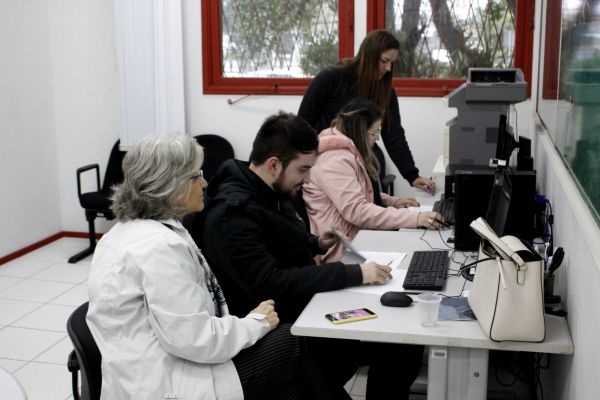
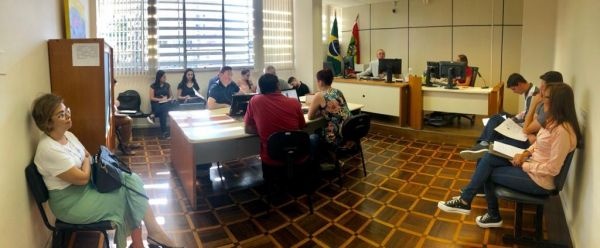
- Partnership with the Federal Justice for community service, especially for the elderly and people with disabilities;
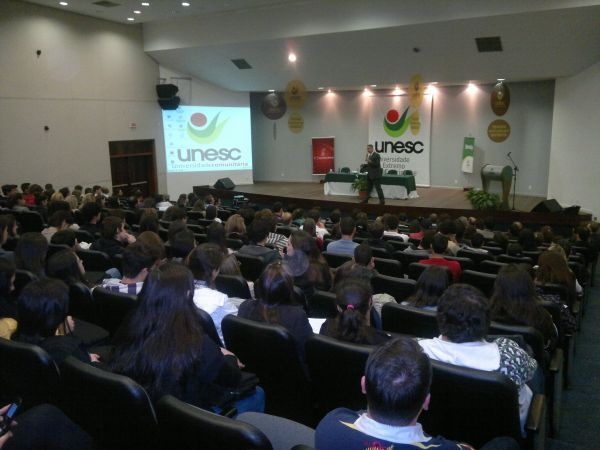
- Partnership with the Superior School of Magistracy of Santa Catarina for classes held on campus;
- Partnership with Procon for community service;
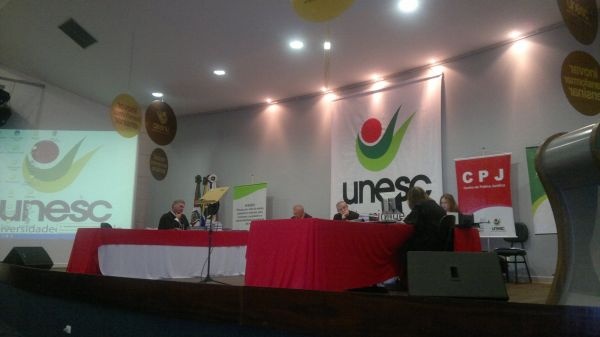
- Sessions of the TJSC (Court of Justice of Santa Catarina) held on campus;
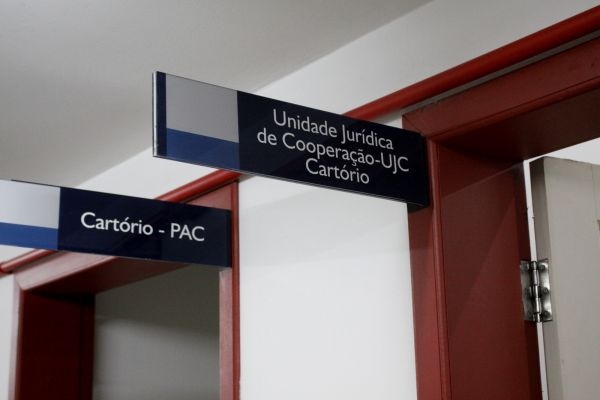
- PAC (Advanced Conciliation Project), a community service extension project involving professors, students, and staff from the campus;
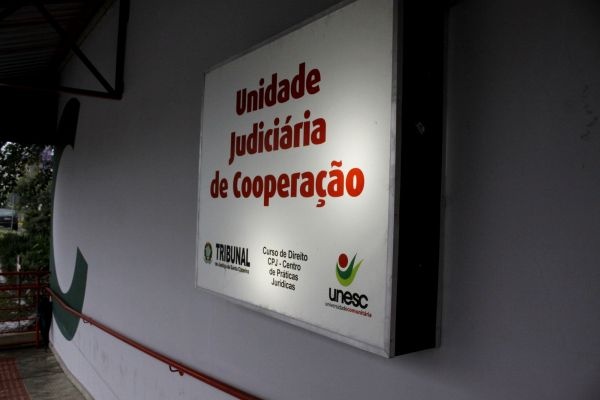
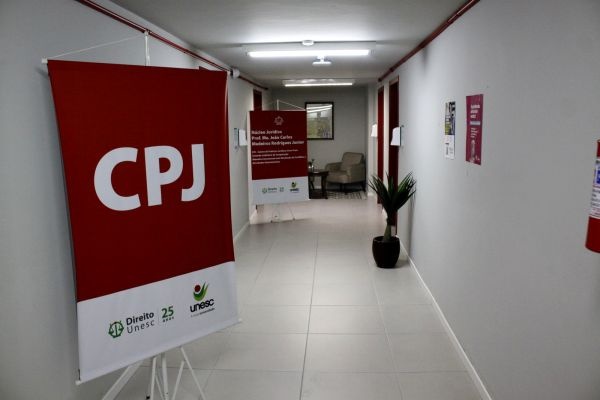
- Advanced Judicial Unit on the UNESC campus, in partnership with the TJSC, responsible for processing cases from the Citizenship Houses, in addition to the Cejusc (Judicial Center for Conflict Resolution), located on campus for service, especially with mediation and conciliation.
What will you learn?
The Bachelor's degree in Law equips you to apply technical knowledge in civil, criminal, labor, constitutional, and administrative processes, as well as in commercial, criminal, constitutional, civil, labor, and private law.
Additionally, you will receive training to understand and master the techniques of Law. You will learn to think about the legal phenomenon in its social, philosophical, political, and historical dimensions. You will study sociology, philosophy, theory of the state, introduction to economics, and ethics.
The program maintains supervising professors in the field available to assist with research, thesis projects, extension projects, and also to ensure interdisciplinary connections among the subjects in the current curriculum and compliance with the calls from the Directorate of Extension, Culture, and Community Actions.
Job Market
The Bachelor's degree in Law allows you to work in various areas of the market. The focus is on training professionals with critical legal awareness.
You can engage in fields such as the Public Ministry (state, federal, labor), judiciary (state, federal, labor), and advocacy. Additionally, you can work as a delegate, inspector, public servant in general (diplomat, teacher, and researcher), and legal advisor.
Subjects
| (Nci)-Formative Laboratory I |
| Legal Philosophy |
| History of Law |
| Introduction to the Study of Law |
| Legal Sociology |
| Criminology |
| People, Acts, and Legal Transactions |
| Legal Writing and Digital Literacy |
| Theory of Crime |
| Theory of State and Constitution |
| (Nci)-Formative Laboratory II |
| Constitutional Law I |
| Consensual Methods of Conflict Resolution |
| Obligations and Contracts |
| Theory of Punishment |
| General Theory of Process |
| Legal Careers |
| Constitutional Law II |
| Specific Crimes |
| Civil Procedure I |
| Criminal Procedure I |
| Properties |
| Administrative Law I |
| Constitutional Law III |
| Family Law |
| Civil Procedure II |
| Criminal Procedure II |
| Labor Relations I |
| Administrative Law II |
| Legal Practices I |
| Criminal Procedure III |
| Appeals and Legal Remedies in Courts |
| Labor Relations II |
| Succession Law |
| Consumer Law |
| International Law |
| Execution and Special Procedures |
| Elective I |
| Legal Practices II |
| Labor Law |
| Financial Law |
| Human Rights |
| Business Law I |
| Legal Practices III |
| Social Security Law |
| Civil Liability |
| Child, Adolescent and Youth Law |
| Digital Law |
| Business Law II |
| Professional Ethics |
| Legal Practices IV |
| Course Work I |
| Tax Law I |
| Environmental Law |
| Elective II |
| Legal Practices V |
| Course Work II |
| Tax Law II |
[dropdown-title]Electives[/dropdown-title]
[dropdown-content]
| Recent Changes to the Consolidation of Labor Laws |
| Legal Anthropology |
| Current Issues in Succession Law |
| Federal Crimes |
| Culture, Society and Environmental Justice |
| Alternative Law |
| Commercial and Business Law III |
| Condominium Law |
| Administrative Constitutional Law |
| State Constitutional Law |
| Municipal Constitutional Law |
| Disability Law |
| Cooperative Law |
| Sports Law |
| Elder Law |
| Law and Social Movements |
| Electoral Law |
| Mining Law |
| Law in the Informational Society |
| Party Law |
| Criminal Law IV |
| Social Security Law |
| Electoral Procedural Law |
| Roman Law |
| Health Law |
| Urban Law |
| Women's Human Rights |
| Human Rights, Equality, and Ethnic-Racial Relations in Brazil |
| Entrepreneurship |
| Legal Education |
| Brazilian State |
| Computer Science Applied to Law |
| Brazilian Sign Language |
| Legal Logic |
| Writ of Security |
| Mediation and Arbitration |
| Forensic Medicine |
| Social Research |
| Public Policies |
| Legislative Process and Technique |
| Psychokinetics Applied to Law |
| Public Records |
| Occupational Safety and Health |
| Society, Democracy, and State |
| Current Topics in Constitutional Law |
| Special Topics in Law |
| Jury Court |
Academic Exclusive
[title-dropdown]Complementary Activities[/title-dropdown]
[content-dropdown]Complementary Activities, or AC, are mandatory teaching, research, and extension actions, with a defined workload in your course's curriculum, to be developed by you, student, throughout your educational journey, realized through academic, scientific, cultural, sports, artistic, and technological innovation activities.
The purpose of Complementary Activities is to provide flexibility in the course curriculum and to offer you, the student, the opportunity for thematic and interdisciplinary deepening beyond the subjects, programs, and projects that make up the pedagogical project of the course, adding value to your academic training.
Regulation of complementary activities
Awaiting publication
[/content-dropdown]
[title-dropdown]Thesis/Dissertation[/title-dropdown]
[content-dropdown]...
[/content-dropdown]
[title-dropdown]Library[/title-dropdown]
[content-dropdown]
The Central Library Prof. Eurico Back – UNESC, has the mission to "Promote quality information retrieval, focusing on the development of teaching, research, and extension activities, combining technology and humanized service."
With free access to the shelves, the Library is located in an area of 2,688.50 m². The service hours are from Monday to Friday, from 7:30 AM to 10:00 PM, and on Saturdays from 8:00 AM to 1:00 PM.
The collection of books, periodicals, and multimedia, as well as the services of technical processing, local database consultation, periodical registration, loan, renewal, return, and reservation are fully computerized by the PERGAMUM Program, which was developed by the Data Processing Center of PUC/Paraná - PUCPR. The location of the works is organized by author, title, subject, or keyword.
The Collection Development Policy of the Central Library aims to define and implement criteria for the development of collections and the updating of the collection.
The Library's collection consists of 82,668 titles and 167,836 volumes of books, has 63 subscriptions to periodicals, and provides access to over 100 databases through the CAPES Periodicals Portal and other publicly accessible databases. It has a subscription to Minha Biblioteca, a database with over 11,000 e-books, in addition to the UpToDate and RT-Online databases.
[/content-dropdown]
[title-dropdown]Periodicals and Databases[/title-dropdown]
[content-dropdown]
-
...
-
...
-
...
[/content-dropdown]
[title-dropdown]Internship[/title-dropdown]
[content-dropdown]
Access here the Internship website
[/content-dropdown]
Coordination
Meet the course coordinators:-
Márcia Andréia Schutz Lírio PiazzaCoordinator
-
Leandro Alfredo da RosaDeputy Coordinator
Ratings Ranking

3
grade
CPC
4
grade
CC
WHAT IS IT LIKE TO STUDY HERE?
Step into the world of the course
Press play on the video