Course Overview
The undergraduate program in Materials Engineering at Unesc provides a comprehensive education for the manufacturing processes and control of various types of materials used in diverse applications. Graduates are trained to understand and work with the three main groups of materials: metals, polymers (plastics), and ceramics.
Differentiators
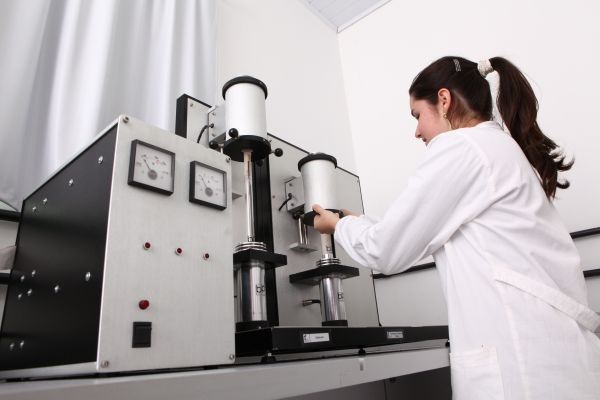
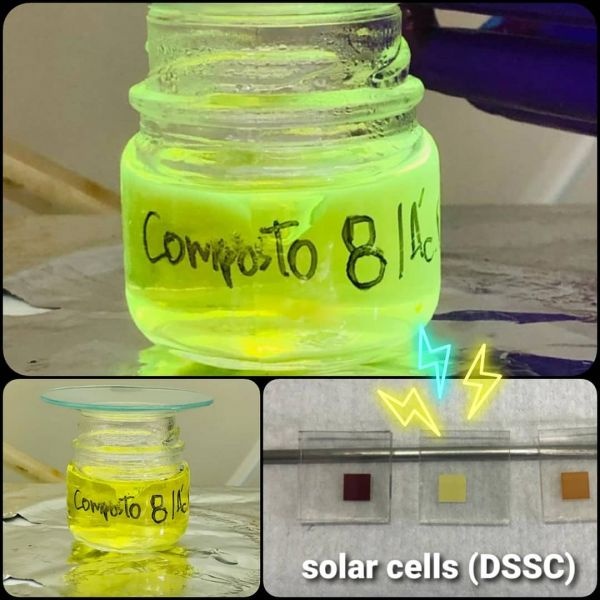
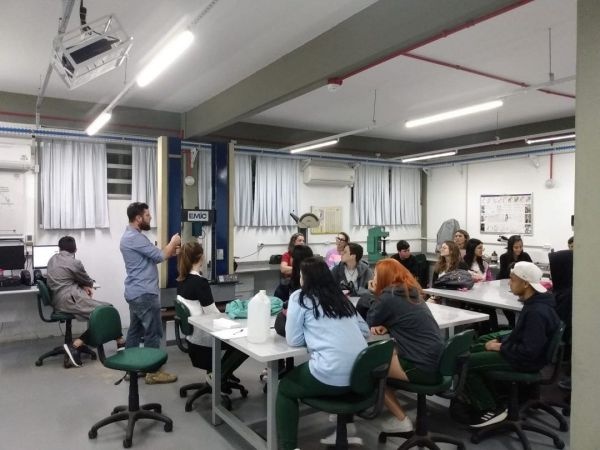
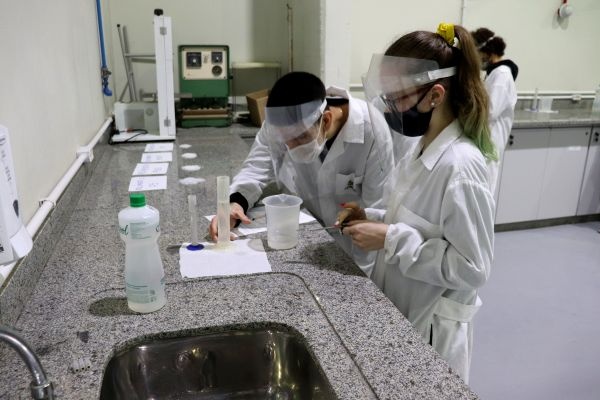
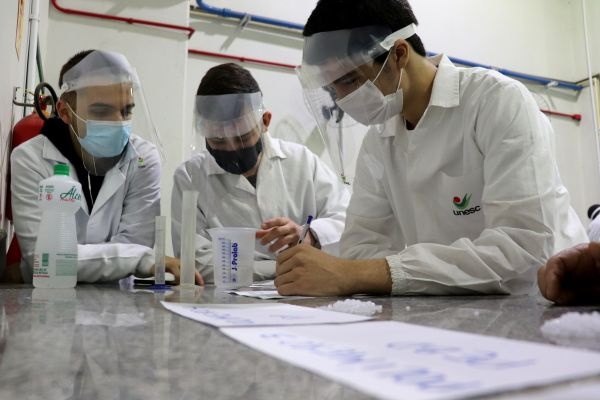
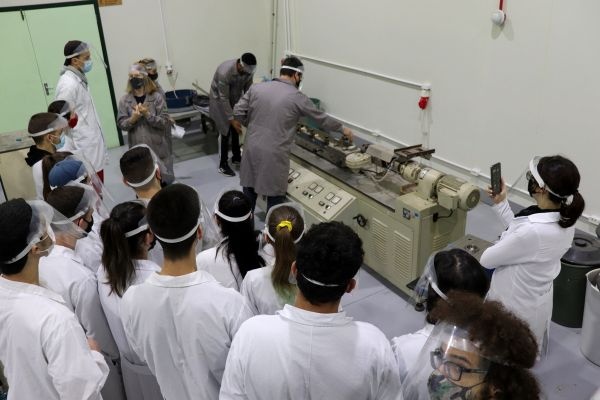
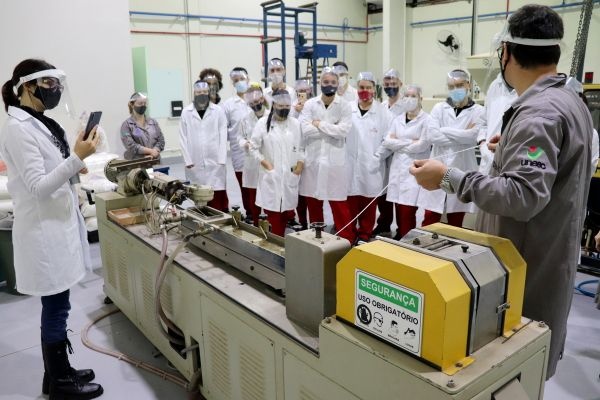
- Modern Laboratories: Equipped with cutting-edge technology, the laboratories allow for practical and theoretical integration, providing effective learning aligned with market demands;
- Professional Focus: The political-pedagogical project prioritizes students' contact with the professional environment from the early semesters;
- Research and Development: Opportunities to participate in technological research activities in collaboration with companies and research institutes, with the possibility of project scholarships;
- Interdisciplinarity: Participation in multidisciplinary groups and themes for the development of technical work;
- National Relevance: Recognized in federal government funding programs due to its strategic importance for the technological development of the country;
- Unique in the Region: The program is the only one in the southern region of Santa Catarina and the northern region of Rio Grande do Sul, ensuring exclusivity in the training of Materials Engineering;
- Qualified Faculty: Composed exclusively of PhDs and Masters, the faculty conducts technological research in industries, especially in the areas of plastics, ceramics, and metalworking.
What will you learn?
During the Materials Engineering course, you will develop a deep understanding of the properties of the main engineering materials currently available, their characteristics, and potential applications. The training includes advanced techniques for controlling industrial processes used in the production of ceramic coatings, casting and metallurgy, and polymers such as disposable plastics, plastic films, and packaging.
Additionally, you will learn to apply critical knowledge and engineering tools in the development of failure analysis, expert assessments, and consulting work, always guided by ethics and professional responsibility.
Job Market
Materials engineers graduated from Unesc are prepared to work in various industrial areas, including ceramic coatings, glass and glazing manufacturing, metalworking industries, plastic packaging, disposable products, automotive, steel, foundries, petrochemical industries, and research and development centers. There are also opportunities in public competitions to work as an expert in different state institutions.
Subjects
| FORMATIVE LAB I: OUR PLACE AND THE FUTURE |
| GRAPHIC EXPRESSION |
| MATRICES AND VECTORS |
| GENERAL AND EXPERIMENTAL CHEMISTRY |
| INTRODUCTION TO MATERIALS ENGINEERING |
| ALGORITHM AND PROGRAMMING |
| FUNCTIONS AND DERIVATIVES |
| PHYSICS OF MOTION |
| MATERIALS SCIENCE |
| GENERAL CHEMISTRY II |
| OSCILLATIONS AND THERMODYNAMICS |
| PHYSICS LABORATORY |
| INTEGRAL CALCULUS |
| SUSTAINABILITY AND ENVIRONMENTAL TECHNOLOGY |
| MINERALOGY |
| MATERIALS SCIENCE II |
| NUMERICAL CALCULUS |
| DIFFERENTIAL EQUATIONS |
| ELECTRICITY AND MAGNETISM |
| ELECTROCHEMISTRY APPLIED TO MATERIALS |
| MATERIALS SCIENCE III |
| PHYSICAL CHEMISTRY |
| TRANSPORT PHENOMENA |
| STATISTICS |
| OPTICS AND MODERN PHYSICS |
| STATICS |
| THERMODYNAMICS OF MATERIALS |
| ELECTRICITY AND ELECTRONICS LABORATORY |
| METAL MANUFACTURING PROCESSES I |
| SOLID MECHANICS I |
| PRODUCTION PLANNING AND CONTROL |
| MATERIALS AND GLASSES |
| METALLURGY OF NON-FERROUS METALS |
| ORGANIC MATERIALS |
| FORMATIVE LAB II |
| ORGANIC MATERIALS LABORATORY |
| CERAMIC MATERIALS I |
| POLYMER ENGINEERING I |
| METALLURGY OF FERROUS MATERIALS |
| MANUFACTURING PROCESSES AND METALS II |
| HEAT TREATMENT |
| CERAMIC MATERIALS II |
| POLYMER ENGINEERING II |
| MATERIALS CHARACTERIZATION |
| COMPOSITE MATERIALS |
| QUALITY MANAGEMENT |
| ELECTIVE I |
| PRODUCT DEVELOPMENT |
| CERAMICS MANUFACTURING PROCESS |
| POLYMER TRANSFORMATION PROCESSES |
| MATERIALS SELECTION |
| ADMINISTRATION AND ECONOMICS |
| COMPULSORY INTERNSHIP |
| INTEGRATIVE PROJECT IN MATERIALS ENGINEERING |
[dropdown-title]Electives[/dropdown-title]
[dropdown-content]
| ACADEMIC WRITING |
| INCLUSION AND LIBRAS |
| MANAGEMENT AND NEGOTIATION |
| LEADERSHIP, INNOVATION, AND ENTREPRENEURIAL CULTURE |
| LOGICAL REASONING |
| EMOTIONAL INTELLIGENCE |
| ASSERTIVE COMMUNICATION AND CONFLICT MEDIATION |
| ART, CULTURE, AND AESTHETIC EXPERIENCE |
| AGILE PROJECT MANAGEMENT METHODOLOGIES |
| PHILOSOPHICAL THOUGHTS |
| LIFE AND HAPPINESS |
[/dropdown-content]
Academic Exclusive
Complementary Activities
Complementary Activities, or AC, are mandatory teaching, research, and extension actions, with a defined workload in your course's curriculum, to be developed by you, student, during your educational journey, realized through academic, scientific, cultural, sports, artistic, and technological innovation activities.
The purpose of Complementary Activities is to provide flexibility in the course curriculum and to offer you, the student, the opportunity for thematic and interdisciplinary deepening beyond the subjects, programs, and projects that make up the pedagogical project of the course, adding value to your academic training.
The purpose of Complementary Activities is to provide flexibility in the course curriculum and to offer you, the student, the opportunity for thematic and interdisciplinary deepening beyond the subjects, programs, and projects that make up the pedagogical project of the course, adding value to your academic training.
Final Paper
Library
The Central Library Prof. Eurico Back – UNESC, has the mission to “Promote quality information retrieval, focusing on the development of teaching, research, and extension activities, combining technology and humanized service.”
With free access to the shelves, the Library is located in an area of 2,688.50 m². The service hours are from Monday to Friday, from 7:30 AM to 10:00 PM, and on Saturdays from 8:00 AM to 1:00 PM.
The collection of books, periodicals, and multimedia, as well as the services of technical processing, local database consultation, periodical registration, loan, renewal, return, and reservation are fully computerized by the PERGAMUM Program, which was developed by the Data Processing Center of PUC/Paraná - PUCPR. The location of the works is organized by author, title, subject, or keyword.
The Collection Development Policy of the Central Library aims to define and implement criteria for the development of collections and the updating of the collection.
The Library's collection consists of 82,668 titles and 167,836 volumes of books, has 63 subscriptions to periodicals, and provides access to over 100 databases through the CAPES Periodicals Portal and other publicly accessible databases. It has a subscription to Minha Biblioteca, a database with over 11,000 e-books, in addition to the UpToDate and RT-Online databases.
Currently, students have access to the following periodicals: ASM Handbook (online subscription), Plástico Moderno, Revista Corrosão e Proteção- ISSN 0100-1485; Materials Research Ibero American Journal of Materials – ISSN 1516-1439; Ciência e Tecnologia dos Materiais – ISSN 08708312; Revista Latino Americana de Metalurgia y Materiales – ISSN 0255-6952 and Revista Matéria – ISSN 1517-7076.
Thus, the course, through the institution, has access to the CAPES periodical portal, which offers access to a database of theses and dissertations, statistical data, and access to the following databases:
- ASTM International (technical standards),
- E-Books (ScienceDirect) (Books),
- Ecological Society of America (ESA),
- Emerald, Encyclopedia of Social Measurement,
- Engineered Materials Abstracts,
- Engineering Research Database,
- Journal Citation Reports (JCR)
- Nature
- Science Direct
- Scopus
- Wiley Online Library
- Web of Science
Periodicals and Databases
Currently, students have access to the following periodicals: ASM Handbook (online subscription), Plástico Moderno, Revista Corrosão e Proteção- ISSN 0100-1485; Materials Research Ibero American Journal of Materials – ISSN 1516-1439; Ciência e Tecnologia dos Materiais – ISSN 08708312; Revista Latino Americana de Metalurgia y Materiales – ISSN 0255-6952 and Revista Matéria – ISSN 1517-7076.
Thus, the course, through the institution, has access to the CAPES periodical portal, which offers access to a database of theses and dissertations, statistical data, and access to the following databases:
- ASTM International (technical standards),
- E-Books (ScienceDirect),
- Ecological Society of America (ESA),
- Emerald, Encyclopedia of Social Measurement,
- Engineered Materials Abstracts,
- Engineering Research Database,
- Journal Citation Reports (JCR)
- Nature
- Science Direct
- Scopus
- Wiley Online Library
- Web of Science
Internship
Access here the Internship website
Internship regulations attached to Resolution 4/2021 of the Teaching Chamber
Coordination
Meet the course coordinator:-
Ângela Beatriz Coelho ArntCoordinator
Ratings Ranking

5
grade
CC
WHAT IS IT LIKE TO STUDY HERE?
Step into the world of the course
Press play on the video