Course Presentation
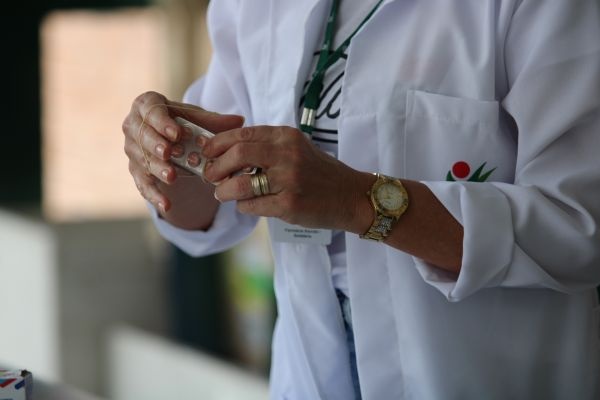
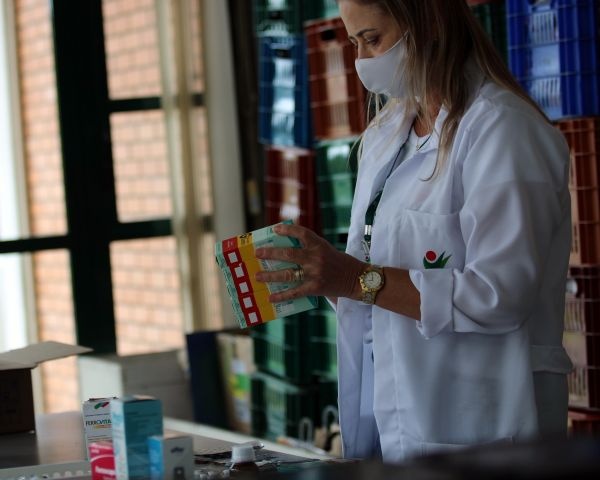
The Pharmacy undergraduate program at Unesc offers a critical and humanistic education, preparing professionals to work in various areas related to medications, clinical analysis, and food. Students are trained in research, development, and production of medications, as well as providing clinical assistance focused on pharmacological treatment. The program also includes participation in the development of cosmetics, toxicological analysis, and over 70 other areas of expertise.
Differentials
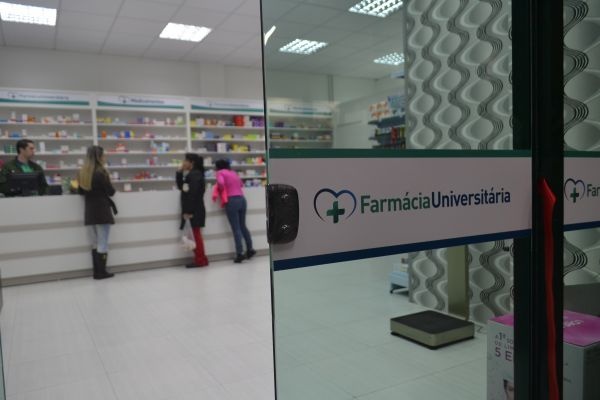
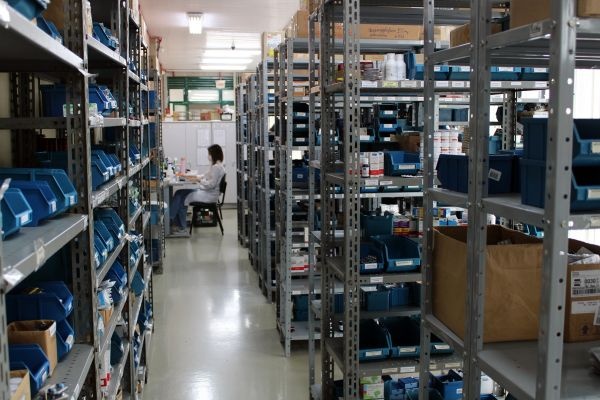
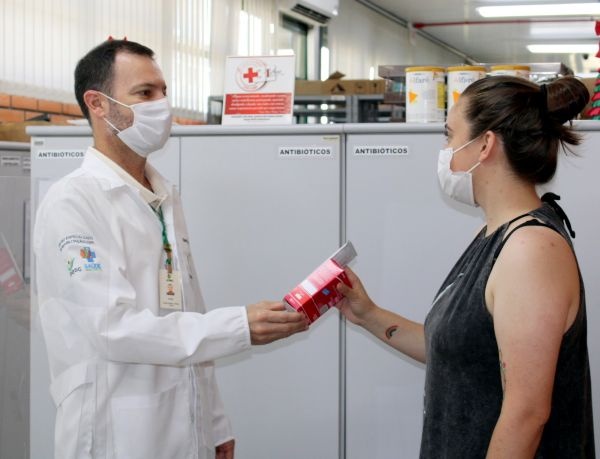
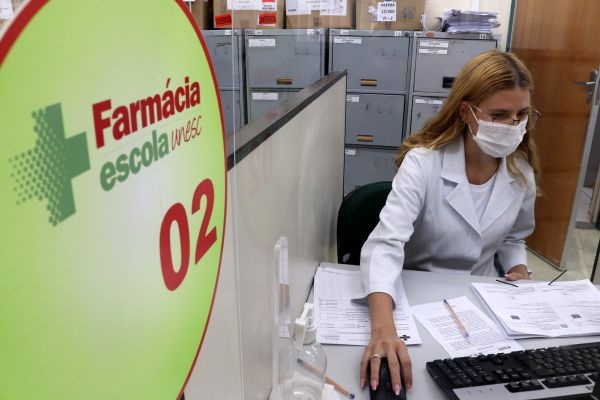
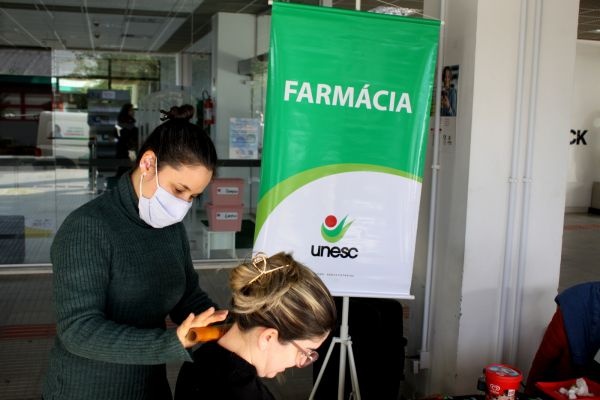
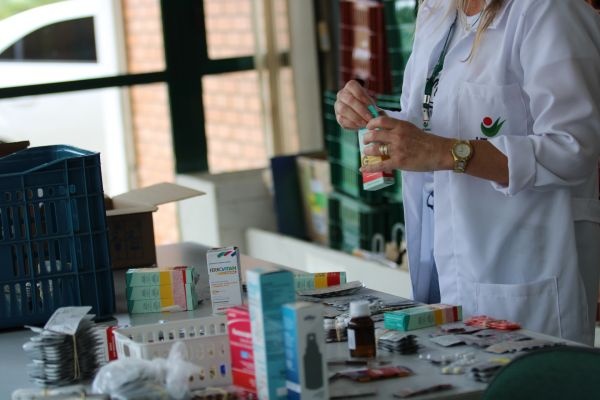
- Integrated Health Clinic: Includes a school pharmacy, solidarity pharmacy, and clinical activities outpatient clinic, providing a solid foundation in medications and pharmaceutical services;
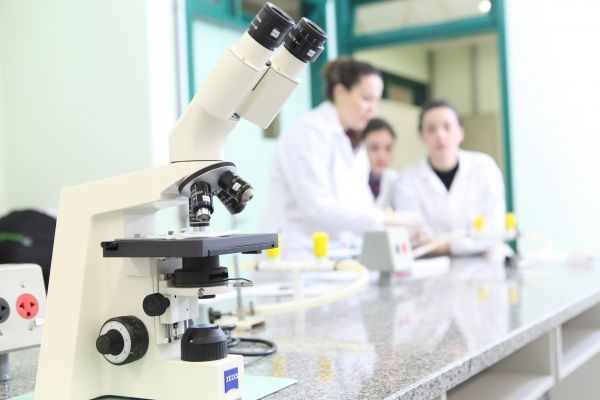
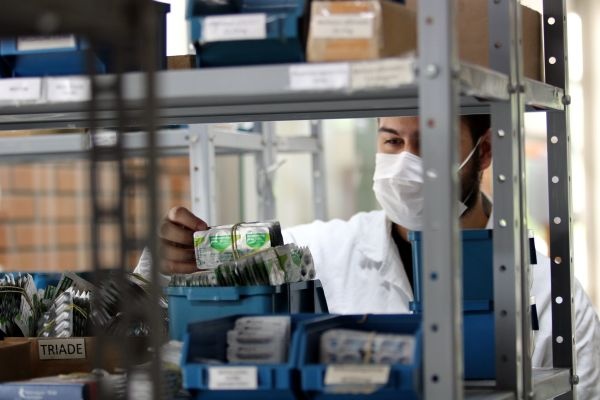
- Laboratory Infrastructure: Modern equipment for practical classes in areas such as medication production, cosmetics, food, and clinical analysis;
- Qualified Faculty: 85% of the professors hold master's and doctoral degrees, offering academic and professional expertise;
- Participation in Projects: Encouragement to participate in research and extension projects, providing relevant practical experience;
- Strategic Partnerships: Collaborations with local pharmaceutical companies for internships in pharmacies, industries, hospitals, and clinical analysis laboratories;
- Academic Events: Opportunities to participate in congresses, seminars, courses, and trips, as well as access to scholarships and non-mandatory internships.
What will you learn?
During the Pharmacy program at Unesc, you will develop comprehensive knowledge in basic sciences such as mathematics, chemistry, and biology, progressing to pharmaceutical sciences. This includes pharmacology, research, development, and production of medications, cosmetics, and food, as well as pathologies, medicinal plants, and quality control in medications and pharmaceutical inputs. Clinical analysis covers microbiology, hematology, biochemistry, body fluids, and interpretation of laboratory tests.
Job Market
The pharmaceutical market offers various opportunities in both the public and private sectors. Pharmacy graduates can work in the medication, cosmetics, food, and clinical analysis industries, including toxicology and homeopathy. Opportunities also include public and private pharmacies, health assistance in hospitals, SUS programs, medication distribution, regulatory agencies, oversight, and academic research.
Subjects
[dropdown-title]Matrix 3[/dropdown-title]
[dropdown-content]
| (NCI)-FORMATIVE LAB I: OUR PLACE AND THE FUTURE |
| (NCA)-HEALTH AND COMMUNITY |
| (NCA)-HUMAN ANATOMY |
| (NCC)-CYTOLOGY AND HISTOLOGY |
| PHARMACEUTICAL SCIENCES |
| (NCC)-BASIC LIFE SUPPORT AND BIOSAFETY |
| (NCC)-BIOCHEMISTRY |
| (NCC)-PATHOPHYSIOLOGY |
| PHARMACEUTICAL PRACTICES |
| INTERNSHIP I |
| CHEMISTRY AND DRUG SYNTHESIS |
| (NCA)-HEALTH SURVEILLANCE AND EPIDEMIOLOGY |
| (NCC)-IMMUNOLOGY |
| (NCC)-EMBRYOLOGY AND GENETICS |
| MOLECULAR BIOLOGY AND DIAGNOSTIC EXAM TECHNIQUES |
| DRUG AND CORRELATES ANALYSIS |
| ORGANIC AND MEDICINAL CHEMISTRY |
| (NCC)-FOOD ANALYSIS |
| PHARMACEUTICAL ASSISTANCE |
| BASICS OF MEDICINAL CHEMISTRY |
| INNOVATION, TECHNOLOGY, AND QUALITY CONTROL OF MEDICINES AND COSMETICS I (LIQUIDS) |
| TOXICOLOGY AND FORENSIC ANALYSIS |
| QUALITY CONTROL OF PHARMACEUTICAL PROCESSES |
| (NCI)-FORMATIVE LAB II |
| THE BASICS OF PHYTOTHERAPY |
| HOMEOPATHY |
| INNOVATION, TECHNOLOGY, AND QUALITY CONTROL OF MEDICINES AND COSMETICS I (SEMISOLIDS) |
| PHYSIOTHERAPY, PHARMACOLOGY, AND THERAPEUTICS I |
| INTERNSHIP II |
| (NCC)-CLINICAL PARASITOLOGY |
| ETHICS, LEGISLATION, AND PROFESSIONAL PRACTICE |
| FOOD TECHNOLOGY AND QUALITY CONTROL |
| PHARMACOGNOSY |
| PATHOPHYSIOLOGY, PHARMACOLOGY, AND THERAPEUTICS II |
| INNOVATION, TECHNOLOGY, AND QUALITY CONTROL OF MEDICINES AND COSMETICS II (SOLIDS) |
| (NCI)-FORMATIVE LAB III |
| ADMINISTRATION, MARKETING, AND PHARMACEUTICAL MANAGEMENT |
| HOSPITAL PHARMACY |
| CLINICAL PHYTOTHERAPY |
| PATHOPHYSIOLOGY, PHARMACOLOGY AND THERAPEUTICS III |
| PHARMACEUTICAL CHEMISTRY I |
| CLINICAL PHARMACY AND PHARMACEUTICAL PRACTICES |
| (NCC)-CLINICAL MICROBIOLOGY |
| PHARMACEUTICAL CHEMISTRY II |
| CYTOLOGICAL AND IMMUNOHEMATOLOGICAL ANALYSIS |
| PATHOPHYSIOLOGY, PHARMACOLOGY AND THERAPEUTICS IV |
| INTERNSHIP III |
| (NCC)-CLINICAL BIOCHEMISTRY |
| (NCA)-FINAL COURSE PROJECT I |
| METABOLIC AND PERFUSION ANALYSES |
| INTERNSHIP IV |
| PHARMACEUTICAL SEMIOLOGY AND SEMIOTECHNIQUE |
| (NCC)-INTEGRATIVE AND COMPLEMENTARY HEALTH PRACTICES |
| (NCC)-FINAL COURSE PROJECT II |
| INTERNSHIP V |
| COSMETOLOGY IN FACIAL AND BODY AESTHETICS |
Matrix 5 and 2
[dropdown-title]Electives[/dropdown-title] [dropdown-content] [/dropdown-content] [/dropdown-content]
ANATOMY
CYTOLOGY, HISTOLOGY AND EMBRYOLOGY
INTRODUCTION TO PHARMACEUTICAL SCIENCES
MATHEMATICS
GENERAL CHEMISTRY
EXPERIMENTAL CHEMISTRY
SCIENTIFIC METHODOLOGY AND RESEARCH I
BIOSTATISTICS
PHYSICAL CHEMISTRY
INTERNSHIP I
EPIDEMIOLOGY
ANALYTICAL CHEMISTRY I
ORGANIC CHEMISTRY I
ANALYTICAL CHEMISTRY II
ORGANIC CHEMISTRY II
PUBLIC HEALTH
PHARMACOBOTANY
QUALITY MANAGEMENT
Biochemistry I
Basic Immunology
Biochemistry II
Basic Pharmacology
Bromatology
Food Technology
Molecular Biology
Sociology
Basic Life Support
Parasitology
Pathophysiology I
Scientific Methodology and Research II
Pathophysiology II
Basic Microbiology
Genetics
Pharmaceutical Technology
Pharmaceutical Care
Clinical Pharmacology I
Internship II
Clinical Pharmacology II
Pharmaceutical Economics and Administration
Pharmaceutical Chemistry
Pharmacognosy
Clinical Hematology
Phytotherapy and Phytotherapeutics
Cosmetology
Clinical Biochemistry
Pharmaceutical Ethics and Legislation
Clinical Cytology
Elective I
Hospital Pharmacy
Internship III
Urinalysis
Homeopathy
Pharmaceutical Attention
Clinical Microbiology
Quality Control of Medicines
Internship IV
Elective II
Research Project
CLINICAL TOXICOLOGY
CLINICAL PARASITOLOGY
PHARMACEUTICAL TECHNOLOGY
CLINICAL IMMUNOLOGY
QUALITY CONTROL IN FOOD
QUALITY CONTROL IN CLINICAL ANALYSES
INTERNSHIP V
FINAL PROJECT
DRUG PLANNING
FERMENTATION TECHNOLOGY
INTRODUCTION TO THE STUDY OF LIBRAS
INSTRUMENTAL ORGANIC ANALYSIS
NUTRITION AND DIETETICS APPLIED TO PHARMACY
FORENSIC PHARMACY
PHARMACOLOGY AND DRUG-NUTRIENT INTERACTION
INTERPRETATION OF LABORATORY TESTS
AFRO-BRAZILIAN AND INDIGENOUS CULTURE
CLINICAL PHARMACOLOGY AND THERAPEUTICS
HEALTH PSYCHOLOGY
HEALTH AND ENVIRONMENTAL EDUCATION
COMPLEMENTARY THERAPIES
PHARMACOEPIDEMIOLOGY
Academic Exclusive
Complementary Activities
Complementary Activities, or AC, are mandatory teaching, research, and extension actions, with a defined workload in the curriculum matrix of your course, to be developed by you, student, during your educational journey, realized through academic, scientific, cultural, sports, artistic, and technological innovation activities.
The purpose of Complementary Activities is to provide flexibility in the course curriculum and to offer you, the student, the opportunity for thematic and interdisciplinary deepening beyond the subjects, programs, and projects that make up the pedagogical project of the course, adding value to your academic training.
The purpose of Complementary Activities is to provide flexibility in the course curriculum and to offer you, the student, the opportunity for thematic and interdisciplinary deepening beyond the subjects, programs, and projects that make up the pedagogical project of the course, adding value to your academic training.
Integrated Clinics
The Integrated Clinics at Unesc have the mission of Assistance, Teaching, and Research in the field of Health Sciences. This mission is carried out through various services offered to the community, including nursing, pharmacy, physiotherapy, medicine, nutrition, dentistry, psychology, and SOS services.
Access here the website of the Integrated Health Clinics.
Final Project
According to the National Curriculum Guidelines for Pharmacy Courses of 2017, to complete the Bachelor’s Degree in Pharmacy, it is recommended to prepare a Final Project under the guidance of a faculty member of the institution, in accordance with the specific areas of action, complying with specific regulations. In the Pharmacy Course, Res. No. 02/2024 of the Pharmacy Course Collegiate regulates the Final Project for Pharmacy.
In addition to the objectives outlined in the Final Project Regulation, the student's perception in the context of professional practice, as well as the critical reading of reality and their own social intervention, constitute objectives of the Final Project, aiming to reveal not only the student's ability to practice Pharmacy but also the specific knowledge necessary for professional practice, both from a theoretical and scientific perspective, as well as their behavior towards science and technology and their engagement with improving human quality of life.
In addition to the objectives outlined in the Final Project Regulation, the student's perception in the context of professional practice, as well as the critical reading of reality and their own social intervention, constitute objectives of the Final Project, aiming to reveal not only the student's ability to practice Pharmacy but also the specific knowledge necessary for professional practice, both from a theoretical and scientific perspective, as well as their behavior towards science and technology and their engagement with improving human quality of life.
Access here Final Project Regulation
Library
The Central Library Prof. Eurico Back – UNESC, has the mission to “Promote quality information retrieval, focusing on the development of teaching, research, and extension activities, associating technologies and humanized service.”
With free access to the shelves, the Library is located in an area of 2,688.50 m². The service hours are from Monday to Friday, from 7:30 AM to 10:00 PM, and on Saturdays from 8:00 AM to 1:00 PM.
The collection of books, periodicals, and multimedia, as well as the services of technical processing, local database consultation, periodical registration, loan, renewal, return, and reservation are fully computerized by the PERGAMUM Program, which was developed by the Data Processing Center of PUC/Paraná - PUCPR. The location of the works is organized by author, title, subject, or keyword.
The Collection Development Policy of the Central Library aims to define and implement criteria for the development of collections and the updating of the collection.
The Library's collection consists of 82,668 titles and 167,836 volumes of books, has 63 subscriptions to periodicals, and access to over 100 databases through the CAPES Periodicals Portal and other publicly accessible databases. It has a subscription to Minha Biblioteca, a database with over 11,000 e-books, in addition to the UpToDate and RT-Online databases.
Periodicals and Databases
-
...
-
...
-
...
Internship
At Unesc, mandatory and non-mandatory internships are regulated by the Statute, the General Regulations of the Institution, and the General Internship Regulations of the Undergraduate Courses, in accordance with current legislation regarding the subject and the National Curriculum Guidelines for undergraduate courses.
The Curricular Internship is a component of the teaching-learning process, aimed at providing students with the development of professional skills and competencies that cannot be achieved within the confines of the classroom or through previously developed practical activities. At this moment, there is also contact with the future profession, facilitating the student's insertion into the job market, guiding them in the performance of their professional activities, and bridging theory and practice. The curricular internship is mandatory for the training of Pharmacists and is included in the National Curriculum Guidelines for Pharmacy and is regulated by Resolution 03/2024 of the Pharmacy Course Collegiate.
Access here the Internship website
Access here Internship Regulations
Coordination
Meet the course coordinators:-
Silvia Dal BóCoordinator
-
Marília Schutz BorgesDeputy Coordinator
Ratings Ranking

3
grade
CPC
4
grade
CC
WHAT IS IT LIKE TO STUDY HERE?
Step into the world of the course
Press play on the video