Course Overview
The undergraduate program in Nutrition at UNESC trains professionals with a generalist, humanistic, and critical profile, prepared to understand and intervene in the various dimensions of human nutrition and food, whether in the promotion, protection, and recovery of health, or in the prevention of diseases in individuals and population groups.
The nutritionist graduated from UNESC is qualified to act ethically, technically, and scientifically, committed to food and nutritional security, food and nutritional education, and the sustainable development of communities.
The training is linked to the Curriculum and Pedagogical Innovation Program – Multi Graduation, which promotes experiential learning, student leadership, and interdisciplinarity, integrating theory, practice, extension, and research throughout the entire undergraduate program.
Differentials
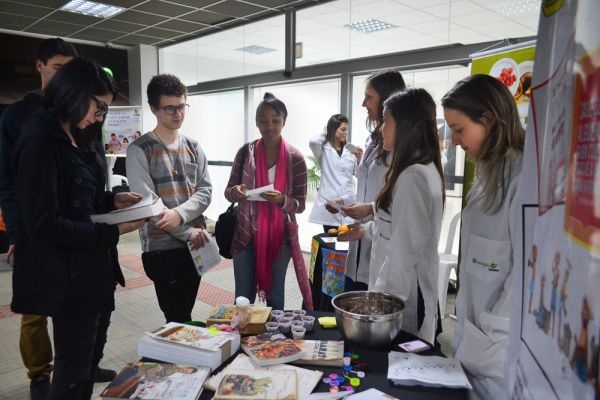
Among its differentiators are UNESC's integrated clinics, modern laboratories, extension projects in health and nutrition, and participation in institutional and community programs, strengthening the integration of teaching, research, and extension.
-
Integration of theory and practice in laboratories, field trips, technical visits, and community activities;
-
UNESC Integrated Clinics and Nutrition Ambulatories, where students provide supervised care to the community in a multiprofessional space for practice, extension, and research;
-
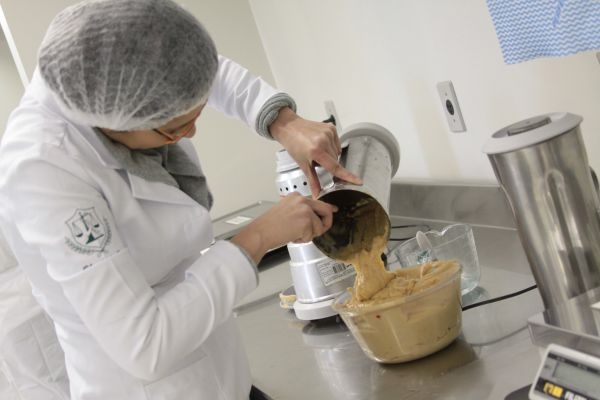
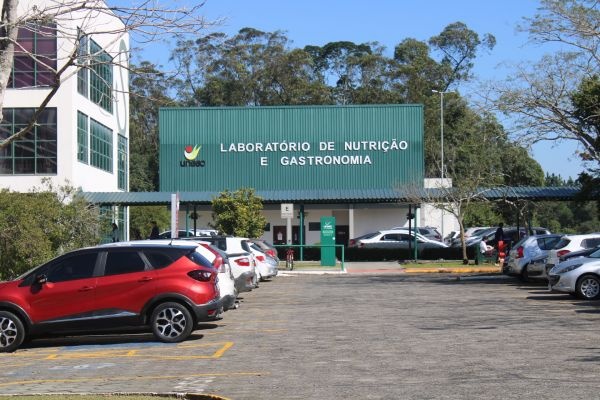
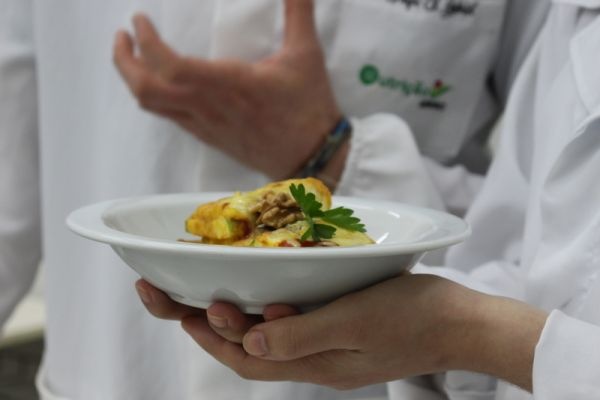
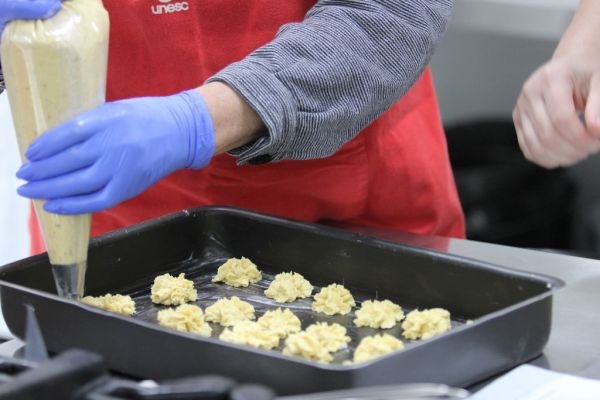
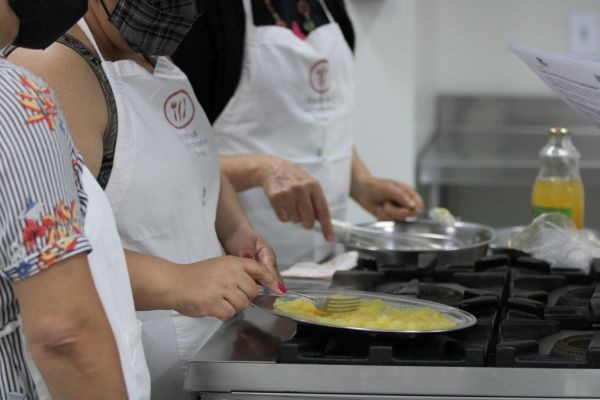
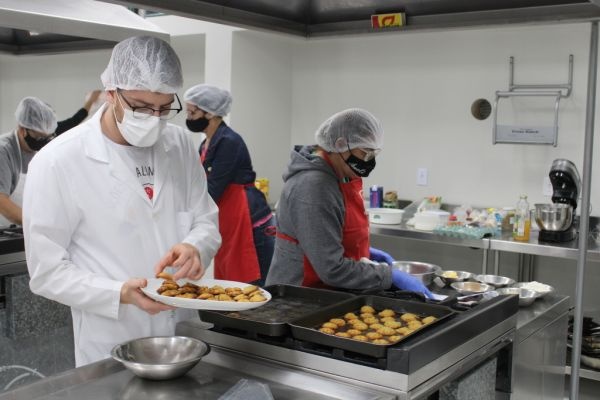
Modern and fully equipped laboratories (Anatomy, Microbiology, Microscopy, Bromatology, Dietetic Techniques, and Food Technology — the latter designed for nutrition and gastronomy classes);
-
Partnerships with industries, hospitals, schools, and public agencies, enabling internships and applied research in real contexts;
-
Agreements with Municipal Health and Education Departments, expanding the field of action and practical training for students;
-
Participation in extension and research projects in the areas of public health, sustainable food, clinical nutrition, and food security;
-
Highly qualified faculty, composed of masters and doctors with experience in teaching, research, and professional practice;
-
Opportunities for international exchange through UNESC's Office of International Relations, with universities in South America, Central America, and Europe;
-
Supervised internships in the three main areas of nutrition: Public Health, Clinical Nutrition, and Collective Food, with guidance from faculty and nutritionists from partner fields;
-
A humanized and community-oriented institutional environment that values the connection with society and social responsibility in the training of nutritionists.
What will you learn?
The Bachelor’s degree in Nutrition includes, in addition to basic and professional subjects, encouragement for independent study, aiming to qualify the future professional's performance. The curricular proposal aims to train a nutritionist capable of addressing health, making decisions, communicating, exercising leadership, managing, and being in continuous learning in sectors related to their area of expertise.
Job Market
The Bachelor in Nutrition has an expanding market, allowing the trained professional to work in various areas, such as private practices and clinics, schools, hospitals, industries, and a wide range of collective food establishments, public agencies, football clubs, gyms, NGOs, among others.
Subjects
[dropdown-title]Matrix 2[/dropdown-title]
[dropdown-content]
| (NCI)-FOUNDATIONAL LAB I |
| (NCA)-HEALTH AND COMMUNITY |
| (NCA)-HUMAN ANATOMY |
| (NCC)-CYTOLOGY AND HISTOLOGY |
| BASICS OF HUMAN NUTRITION AND DIET |
| (NCC)-BIOCHEMISTRY |
| GASTRONOMY AND FOOD CULTURE |
| CALCULATION AND ANALYSIS OF DIETS FOR INDIVIDUALS AND COMMUNITIES |
| NUTRITIONAL ASSESSMENT AND DIAGNOSIS |
| PHYSIOLOGY |
| NUTRITION, SUSTAINABILITY AND SANITATION |
| (NCA)-HEALTH MONITORING AND EPIDEMIOLOGY |
| (NCC)-MICROBIOLOGY, PARASITOLOGY AND IMMUNOLOGY |
| PHYSIOLOGICAL BIOCHEMISTRY AND EPIGENETICS |
| FOOD AND NUTRITION EDUCATION |
| HYGIENE AND SANITARY CONTROL OF FOOD |
| NUTRITION THROUGHOUT THE LIFE CYCLE |
| (NCC)-INTEGRATIVE AND COMPLEMENTARY HEALTH PRACTICES |
| (NCC)-FOOD ANALYSIS |
| ALTERNATIVE NUTRITION AND PHYTOTHERAPY |
| NUTRITIONAL CLINIC I |
| NUTRITION AND DIETETICS |
| BIOETHICS AND NUTRITION |
| MANAGEMENT OF PUBLIC POLICIES IN FOOD AND NUTRITION |
| NUTRITIONAL CLINIC II |
| PSYCHOLOGY AND EATING BEHAVIOR |
| COLLECTIVE FOOD MANAGEMENT I |
| HOSPITAL GASTRONOMY AND HOSPITALITY |
| NUTRITIONAL CLINIC III |
| (NCI)-FOUNDATIONAL LAB II |
| (NCA)-FINAL COURSE PROJECT I |
| FUNCTIONAL AND AESTHETIC CLINICAL NUTRITION |
| COLLECTIVE FOOD MANAGEMENT II |
| NUTRITION AND LONGEVITY |
| NUTRITION AND PHYSICAL EXERCISE |
| FOOD SCIENCE AND TECHNOLOGY |
| (NCC)-FINAL COURSE PROJECT II |
| SUPERVISED INTERNSHIP I: NUTRITION IN PUBLIC HEALTH |
| SCHOOL FOOD MANAGEMENT |
| ENTREPRENEURSHIP AND MARKETING IN NUTRITION |
| SUPERVISED INTERNSHIP II: CLINICAL NUTRITION |
| SUPERVISED INTERNSHIP III: COLLECTIVE NUTRITION |
Matrix 1
FOOD AND NUTRITION: THE FOUNDATION OF LIFE
NUTRITION, HEALTH, AND COMMUNITY
HUMAN ANATOMY
CYTOLOGY AND HISTOLOGY
ANTHROPOLOGY OF FOOD
GENETICS AND EMBRYOLOGY
BIOCHEMISTRY
MICROBIOLOGY, MYCOLOGY, AND PARASITOLOGY
HUMAN PHYSIOLOGY
BROMATOLOGY
INTEGRATIVE SEMINAR I
INTEGRATIVE SEMINAR II
SCIENTIFIC METHODOLOGY AND RESEARCH
PHYSIOLOGICAL BIOCHEMISTRY
NUTRITIONAL ASSESSMENT
CALCULATION AND ANALYSIS OF DIETS FOR INDIVIDUALS AND GROUPS
BIOSTATISTICS
EPIDEMIOLOGY
NUTRITION EDUCATION
INTEGRATIVE SEMINAR III
HYGIENE AND FOOD QUALITY CONTROL
IMMUNOLOGY
FOOD SCIENCE AND TECHNOLOGY
APPLIED PSYCHOLOGY IN NUTRITION
NUTRITION AND PUBLIC HEALTH
NUTRITION: ART AND SCIENCE I
NUTRITION ACROSS THE LIFE CYCLES I
ELECTIVE I
INTEGRATIVE SEMINAR IV
NUTRITION: ART AND SCIENCE II
NUTRITION ACROSS THE LIFE CYCLES II
ELECTIVE II
SOCIOLOGY
PATHOPHYSIOLOGY OF NUTRITION I
NUTRITION THERAPY I
MANAGEMENT IN COLLECTIVE NUTRITION I
ELECTIVE III
PATHOPHYSIOLOGY OF NUTRITION II
NUTRITION THERAPY II
MANAGEMENT IN COLLECTIVE NUTRITION II
NUTRITION AND AGING
FINAL PROJECT
NUTRITION AND PHYSICAL EXERCISE
BIOETHICS
MANAGEMENT OF PUBLIC POLICIES IN FOOD AND NUTRITION
FINAL PAPER - TCC
INTERNSHIP IN NUTRITION AND PUBLIC HEALTH
INTERNSHIP IN COLLECTIVE NUTRITION
INTERNSHIP IN CLINICAL NUTRITION
Electives
LIBRAS
ALTERNATIVE NUTRITION
PHARMACOLOGY AND DRUG-NUTRIENT INTERACTION
GASTRONOMY AND NUTRITION
SENSORY ANALYSIS OF FOODS
ENTERAL AND PARENTERAL NUTRITION
PHYSICAL ACTIVITY AND QUALITY OF LIFE
AFRO-BRAZILIAN AND INDIGENOUS CULTURE
NUTRITION AND FUNCTIONAL FOODS
BASIC LIFE SUPPORT
INFORMATICS AND NUTRITION
ANTHROPOMETRY
TEXT PRODUCTION AND INTERPRETATION
HEALTH AND ENVIRONMENTAL EDUCATION
LEADERSHIP FOR NUTRITIONAL UNIT MANAGERS
SCHOOL NUTRITION MANAGEMENT
FOOD AND NUTRITION EDUCATION IN PRACTICE
NUTRITION AND PHYTOTHERAPY
Academic Exclusive
Complementary Activities
Complementary Activities, or AC, are mandatory teaching, research, and extension actions, with a defined workload in your course's curriculum matrix, to be developed by you, student, during your educational journey, realized through academic, scientific, cultural, sports, artistic, and technological innovation activities.
The purpose of Complementary Activities is to provide flexibility in the course curriculum and to offer you, the student, the opportunity for thematic and interdisciplinary deepening beyond the subjects, programs, and projects that make up the pedagogical project of the course, adding value to your academic training.
The purpose of Complementary Activities is to provide flexibility in the course curriculum and to offer you, the student, the opportunity for thematic and interdisciplinary deepening beyond the subjects, programs, and projects that make up the pedagogical project of the course, adding value to your academic training.
Integrated Clinics
The Integrated Clinics at Unesc have the mission of Assistance, Teaching, and Research in the field of Health Sciences. This mission is carried out through various services offered to the community, including nursing, pharmacy, physiotherapy, medicine, nutrition, dentistry, psychology, and SOS services.
Access here the website of the Integrated Health Clinics.
Final Project
The Final Project is developed in two stages – TCC I and TCC II – starting from the sixth semester.
In the first stage, the student prepares a research project, submitting it to the Research Ethics Committee (CEP) when necessary.
In the second stage, the complete work is developed under faculty guidance and may be presented in the format of a scientific article.
The Final Project is an essential activity to consolidate the process of scientific initiation and knowledge production during the undergraduate program.
Library
The Central Library Prof. Eurico Back – UNESC, has the mission of “Promoting quality information retrieval, focusing on the development of teaching, research, and extension activities, combining technology and humanized service.”
With free access to the shelves, the Library is located in an area of 2,688.50 m². The service hours are from Monday to Friday, from 7:30 AM to 10:00 PM, and on Saturdays from 8:00 AM to 1:00 PM.
The collection of books, periodicals, and multimedia, as well as the services of technical processing, consultation of the local database, registration of periodicals, loan, renewal, return, and reservation are fully computerized by the PERGAMUM Program, which was developed by the Data Processing Center of PUC/Paraná - PUCPR. The location of the works is organized by author, title, subject, or keyword.
The Collection Development Policy of the Central Library aims to define and implement criteria for the development of collections and the updating of the collection.
The Library's collection consists of 82,668 titles and 167,836 volumes of books, has 63 subscriptions to periodicals, and provides access to over 100 databases through the CAPES Periodicals Portal and other publicly accessible databases. It has a subscription to Minha Biblioteca, a database with over 11,000 e-books, in addition to the UpToDate and RT-Online databases.
Internship
The Supervised Curricular Internships begin in the seventh semester and total 660 hours, corresponding to 20% of the total course workload. They are distributed across three areas of practice:
-
Nutrition in Public Health (7th semester)
-
Clinical Nutrition (8th semester)
-
Collective Nutrition (8th semester)
The internships occur under faculty supervision and the guidance of nutritionists from partner fields, ensuring experiences in different professional practice scenarios.
Although the course is offered in the evening, internships preferably take place during the day, ensuring quality and diversity of formative experiences.
Access here the Internship website
Coordination
Meet the course coordinators:-
Fabiane Maciel FabrisCoordinator
-
Alessandra Zanette Ghisi FrassettoDeputy Coordinator
Ratings Ranking

4
grade
CPC
4
grade
CC
WHAT IS IT LIKE TO STUDY HERE?
Step into the world of the course
Press play on the video